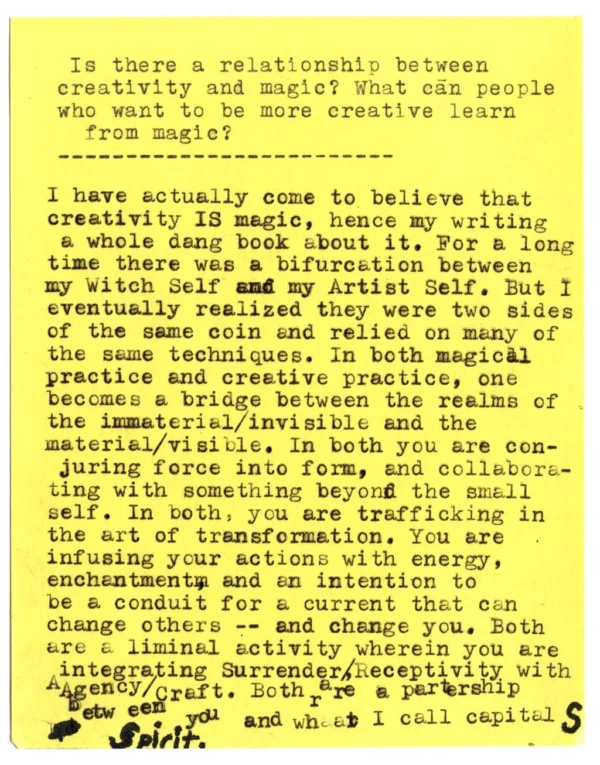
Here is the first question from my typewriter interview with Pam Grossman.
Here is the first question from my typewriter interview with Pam Grossman.
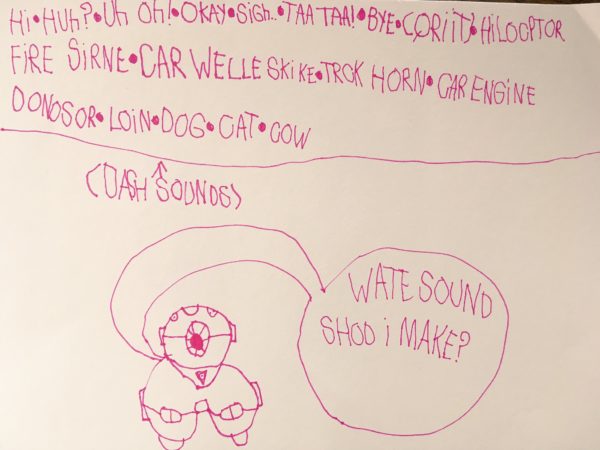
1. Composer and Beethoven biographer Jan Swafford was asked to respond to the “10th symphony” created with artificial intelligence. “At the end of the symphony I found myself more philosophical than annoyed,” he writes.
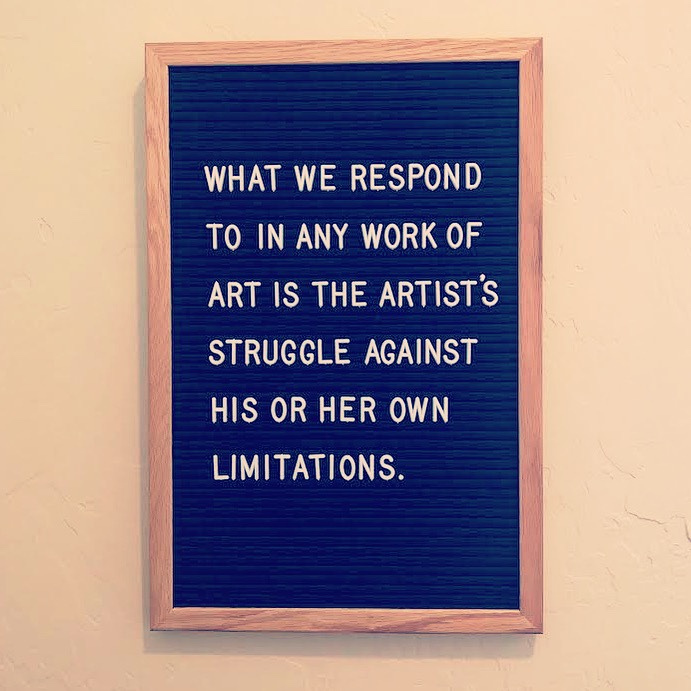
The ability of a machine to do or outdo something humans do is interesting once at most… When it comes to art, we need to see a woman or a man struggling with the universal mediocrity that is the natural lot of all of us and somehow out of some mélange of talent, skill, and luck doing the impossible, making something happen that is splendid and moving—or funny, or frightening, or whatever the artist set out to do… Here’s my assertion: True intelligence is in a body. Intelligence outside a living body, as some sort of abstraction, is innately impossible, or should be given another name.
Swafford points out (like Nick Cave has) that part of the beauty of Beethoven is, “in contrast say to Mozart and Bach, with him it’s often as if you can hear the effort, the struggle, hear in the notes what it cost him to rise above the universal mediocrity.”
He writes of his late friend, the painter Francis Gillespie:
She would spend a year or more on a painting of flowers, struggling to represent them with virtually photographic accuracy. In fact, as she knew perfectly well, she didn’t have the technique to do that. “I’m really sort of a primitive,” Fran would say grimly as she worked. But what makes her paintings hers is exactly the grand failure of her attempt. Her pictures are beautiful, close to photos, but always a little off, and the offness makes them singular.
Ted Gioia calls this “an aesthetics of imperfection.”
In this story, the human has something the machine can never have.
2. In Sam Anderson’s profile of Laurie Anderson, he notes that the artist has “become obsessed, lately, with artificial intelligence.” She worked with researchers to make text engines in her style, the style of her late husband, Lou Reed, and an Anderson/Reed blend of the two. Anderson says a 1/3 of what the computer spits out is junk, 1/3 is boring, but 1/3 is “surprising, even authentic, some kind of fresh magic.”
Sometimes she sits there with the hunger of an addict, feeding words and pictures into the engine, seeing what comes out. For a long time, she would save the texts. They felt so precious. After a while, though, she realized that the texts were infinite. She could have one whenever she needed it. So she read them and then let them go.
At one point, Laurie Anderson reeds a poem the machine spit out in Reed’s style. It’s not bad. “Wonderful,” she says. “Just great. He’s talking to me from somewhere else. I definitely do feel that. The line is pretty thin for me.”
(This scene reminded me of something out of Don Hertzfeldt’s World of Tomorrow.)
In this story, the machine gives the human a combination of something it had and something it never had.
3. I am sympathetic to Swafford’s assertion that “intelligence is in a body” and “the aesthetics of imperfection.”
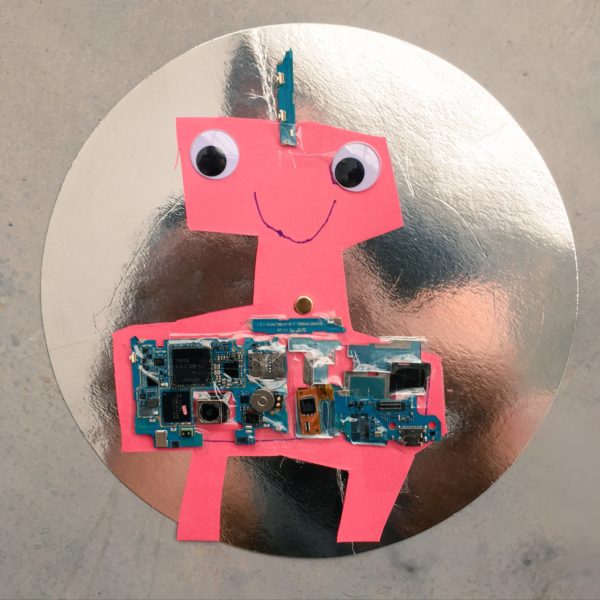
I also know that some of my favorite art came out of the interplay between human and machine. It is between the two that a third thing emerges — Beethoven, after all, was wrangling notes out of a machine with keys.
I think it is worth noting the difference between analog and digital machines. Analog machines, I would venture, give you more mistakes that you can work with — a brush runs out of ink, and the dry texture gives you new marks, Lee Perry blows ganja smoke and dirt on a tape reel, and new sounds emerge. (You throw dirt in a laptop and you’ll simply fry the machine.) That said, even digital machines and pieces of software have quirks and we ascribe them personalities, and work with them.
I would also note the difference between words and music. Words are more abstract than music. They are more easily fed into a computer and spit back out. They also must be interpreted by us — when we read the poem in the style of Reed, summoned from the computer, it is already an abstract, linear text. We must interpret the words. Music is not interpreted. It is what it is. It is heard.
I confess I have gone from being cranky to curious about A.I., and I wonder what sorts of grunt work it could do for me. (Could it spit out a book proposal?)
In my story, the machines help us to honor what is not machine-like in us.
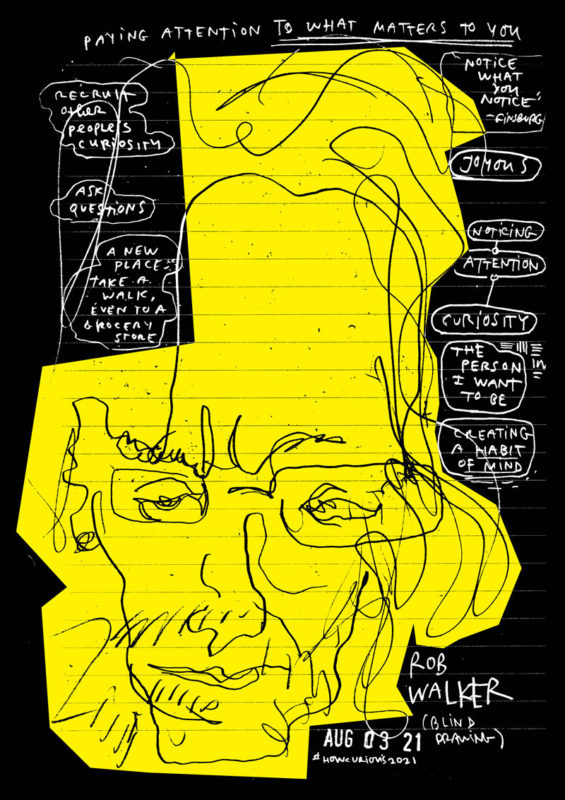
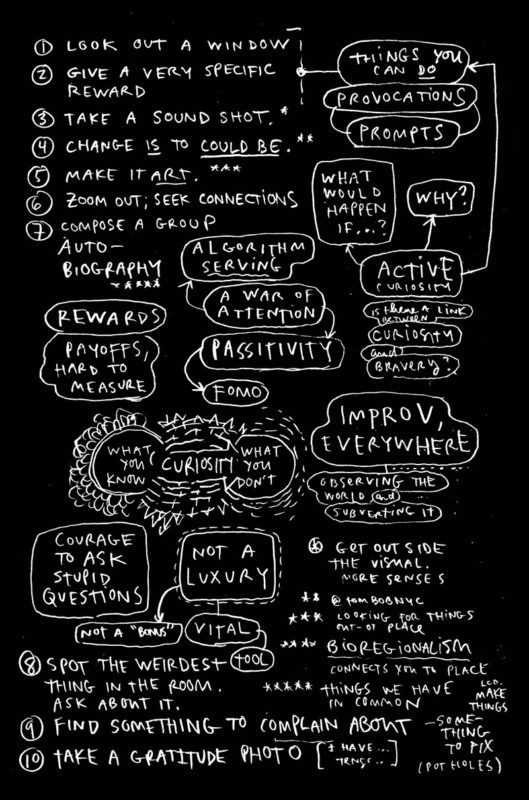
I drew my friend Rob Walker on Zoom today making the case for curiosity. Do check out his book, The Art of Noticing, and his excellent, excellent newsletter. (I drew in pencil in my notebook, so I had to perform a few photoshop shenanigans to make them legible.)
My favorite part of the talk was Rob’s idea that curiosity is not a luxury or a bonus or an add-on to life — it’s vital tool that makes our life and work richer.
Like creativity, curiosity might be better thought of as a verb, not a noun — not something that some people possess and some people don’t, but something everyone can do and get better at.
It’s possible to get curiouser, or to become, like the title of Nina Katchadourian’s art show, a Curiouser.
“How long will things be the same? Surely I will be awake, I will sleep, I will be hungry, I will be cold, I will be hot. Is there no end? Do all things go in a circle?
—Seneca
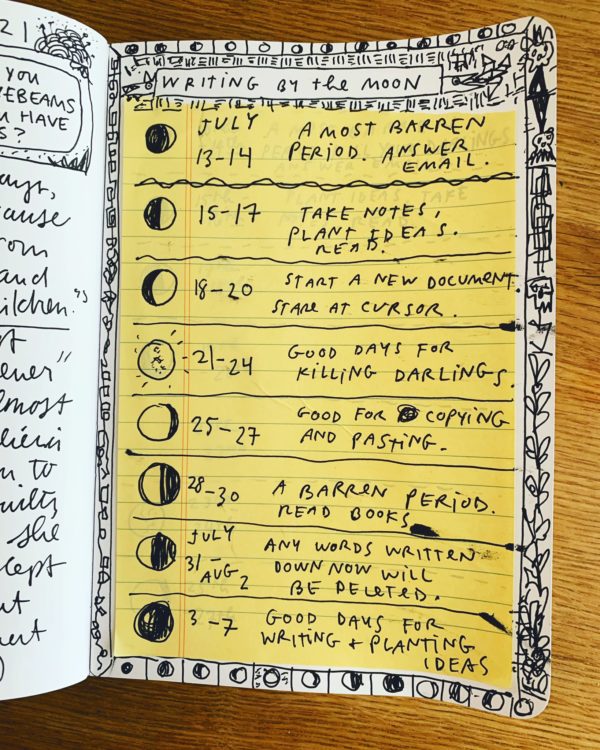
I am fascinated by the Farmer’s Almanac, and the “Planting by the Moon” guide in particular, which has advice such as: “Root crops that can be planted now will yield well.” “Good days for killing weeds.” “Good days for transplanting.” “Barren days. Do no planting.”
I think it’d be funny to make up an almanac for writers* and artists, one that emphasized the never-ending, repetitive work of the craft.
“Almanacs are cyclical,” writes Jess McHugh, author of Americanon, “a reminder that things happen in their time and place, and we can prepare and make plans, but frost might come anyway.”
“The secret of The Old Farmer’s Almanac: pay attention,” Tim Clark, a former editor at the Almanac, once told me. “Pay attention to the sky, and the winds, and the tides, and the number of acorns on the ground in the fall, and what the animals are doing, and which way the birds are flying. Pay attention. And that’s what a farmer in 1792 — or 1292 — had to do to survive.”
Like a farmer (or a pirate), you have to pay attention to your own atmosphere and weather, to know what season you’re in, and beware of attempting to flourish in suboptimal conditions.
An almanac could help…
* * *
* I must admit, despite who owns it, I still read the Writer’s Almanac email every day.
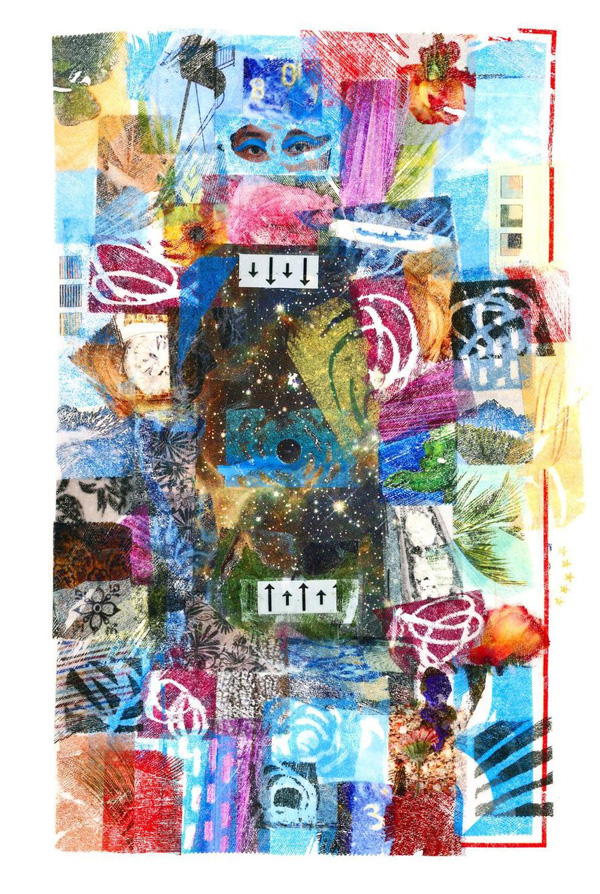
I first discovered aphantasia when I wrote a post about having an imagination (“images in the head”) and a few people wrote to me and told me they literally can’t form pictures in their heads. This information blew my mind, and I’ve been fascinated ever since.
In The New York Times this week, Carl Zimmer follows up his original article with a report on the ways scientists are studying aphantasia, along with its opposite, hyperphantasia, or a mind’s eye that’s so vivid it’s sometimes hard to distinguish between what’s real and what’s not.
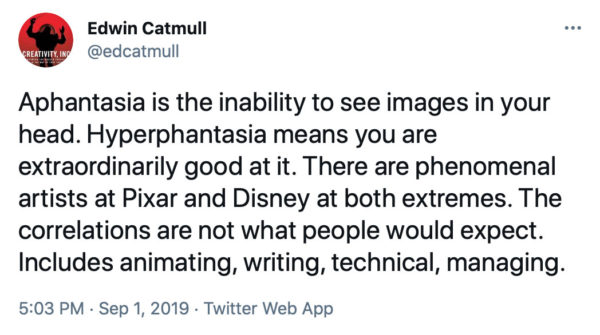
Ed Catmull, who co-founded Pixar and helped make huge advances in 3-D animation, announced “my mind’s eye is blind” a few years ago, and even found other animators at Pixar with aphantasia. He told the BBC that aphantasia helps clear up “some misconceptions about creativity”:
“People had conflated visualisation with creativity and imagination and one of the messages is, ‘they’re not the same thing’.
“The other one I think that people might have assumed, but if you think about it you can see why it’s false assumption, is you would think if a person could visualise, they’re more likely to be able to draw.
“If you open your eyes and you take out a pencil and pad, how many people can draw what they see? The answer is a very small number, so if you can’t draw what is in front of you then why would we expect that you would be able to draw what you visualise?”
I used to be one of those people who conflated creativity with imagination! When I first heard about aphantasia, it sounded like a disability to me, but I quickly learned that it can actually be helpful, depending on what you’re trying to do. For example, I read about a writer who said that since she doesn’t think in images, there’s no need to translate them, so it’s easier to get thoughts down on the page. (My friend Kelli Anderson talked to a designer with aphantasia who said she worked with “a tinkering, try-things-out process.”)
Fantasy novelist Mark Lawrence wrote an essay about his experience with aphantasia, and lo and behold, he discovered his condition the same way Ed Catmull did: by being asked to visualize something during meditation. At first, Lawrence says he felt robbed of something, but then he came around:
These days, I reject the description of aphantasia as a defect. I see it as an alternative. You see a horse if asked to imagine one. I find this rather limiting. I imagine a web of horse-stuff that leads me down many paths. The idea of seeing one particular horse actually lacks appeal. What if it’s not the horse I want? What if I want something larger, more fundamental than an image?
Lawrence also notes he was shocked to discover “there are people who don’t hear an inner voice.” In Blake Ross’s essay about what it’s like to have aphantasia, he describes what goes through his mind all day, instead of pictures: “All narration, all the time. An infinite script of milk voice dialogue. When you read a sarcastic essay from me, it is a transcript of this voice.” (A man in Carl Zimmer’s article described aphantasia as “thinking only in radio.”)
Now I feel like I’m missing out on something!
Read more: “Images in the head”
This site participates in the Amazon Affiliates program, the proceeds of which keep it free for anyone to read.