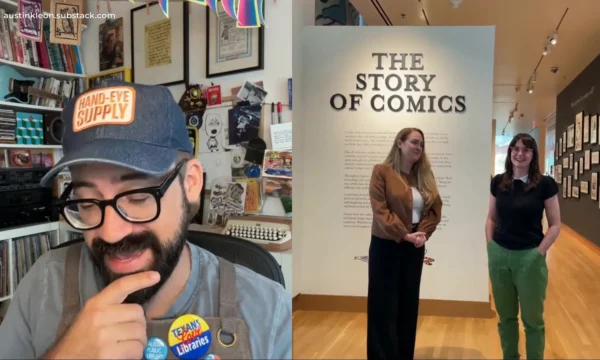
Curators Jenny Robb and Caitlin McGurk took me on a 45-minute guided tour of one of my favorite places: the Billy Ireland Cartoon Library & Museum on the OSU campus in Columbus, Ohio. Really fun. Watch the video.
Curators Jenny Robb and Caitlin McGurk took me on a 45-minute guided tour of one of my favorite places: the Billy Ireland Cartoon Library & Museum on the OSU campus in Columbus, Ohio. Really fun. Watch the video.
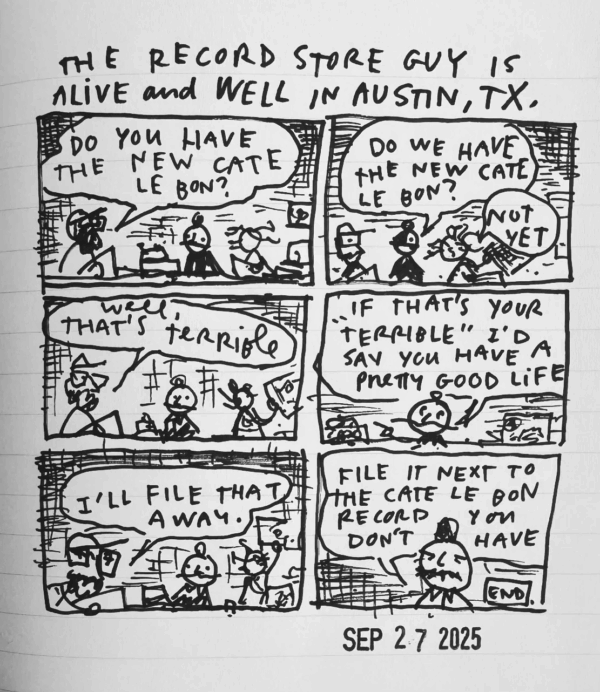
A true story. Featured in my letter, “One thing after another.”
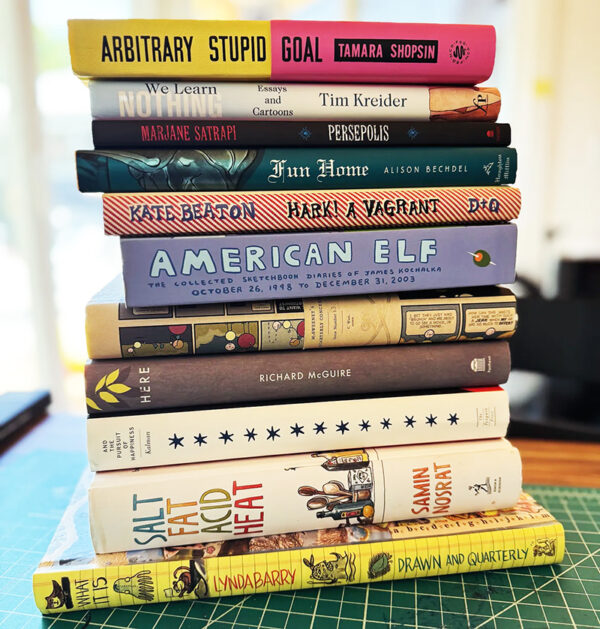
Today’s newsletter begins:
Like many book nerds, I got sucked into the NYTimes list of 100 Best Books of the 21st Century. I am with Paul Ford that “Why Wasn’t I Consulted?” is the fundamental question of the internet, and so a list like this one is bound to get big clicks…
One thing that struck me is that only two (great) comics made the list — Alison Bechdel’s Fun Home (2006) and Marjane Satrapi’s Persepolis(2004).
I thought it might be fun for me to list a few more books from this century that have pictures and words that have made a big impact on me in the past 24 years…
No paywall today so you can read the whole thing here.
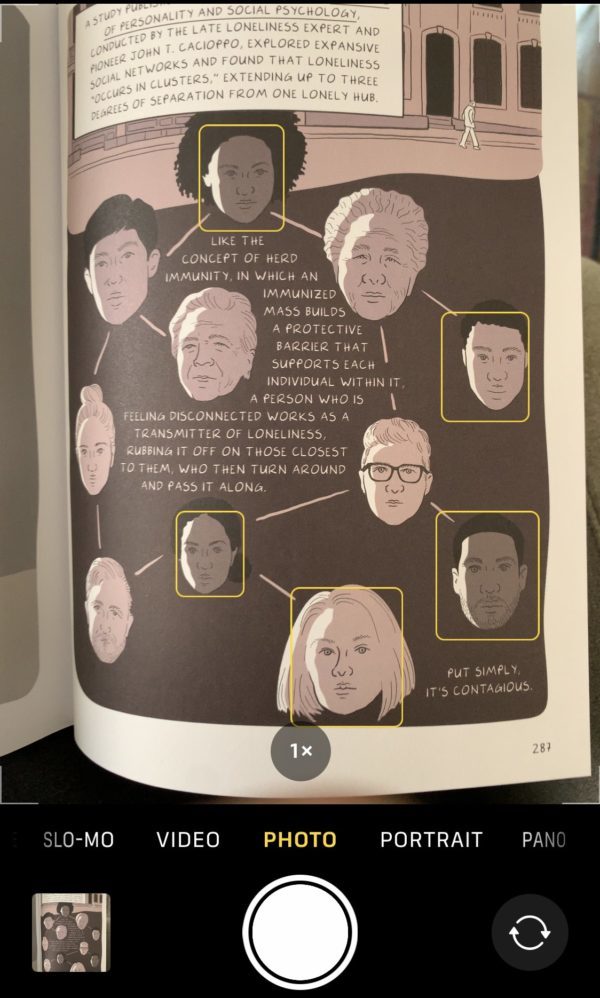
While taking a photo of Kristen Radtke’s wonderful book, Seek You: A Journey Through American Loneliness, I noticed my iPhone camera was trying to recognize some of the faces in the comic.
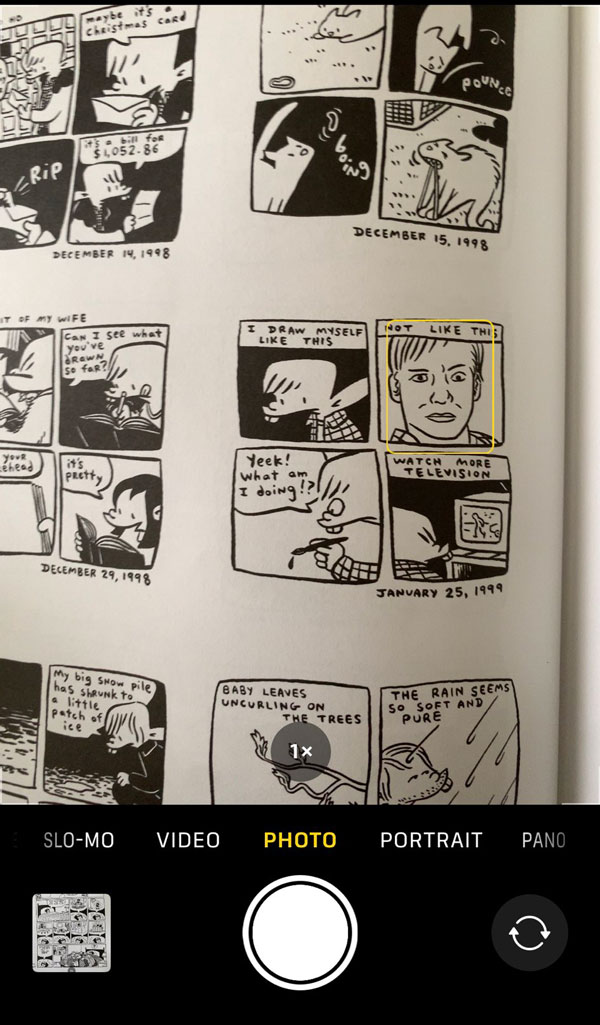
Humans are programmed to see faces in almost anything. But I got to wondering how realistically drawn a face had to be in a comic strip for the machine to recognize it. So I pulled out one of my comics anthologies and did some tests:
Fascinating what facial recognition picks up… ? pic.twitter.com/vLiPYdPfCc
— Austin Kleon (@austinkleon) September 7, 2021
The funniest and most meta recognition was in this strip of James Kochalka’s American Elf, in which he draws himself realistically:
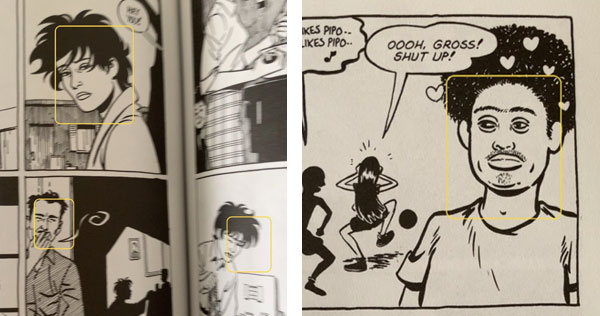
When it came to Love and Rockets, I expected the machine to recognize Jaime, but not Beto. I was wrong:
Another sampling of cartoonists whose faces got detected, clockwise, from top left: Chris Ware, Adrian Tomine, Daniel Clowes, and, surprisingly, Ben Katchour.
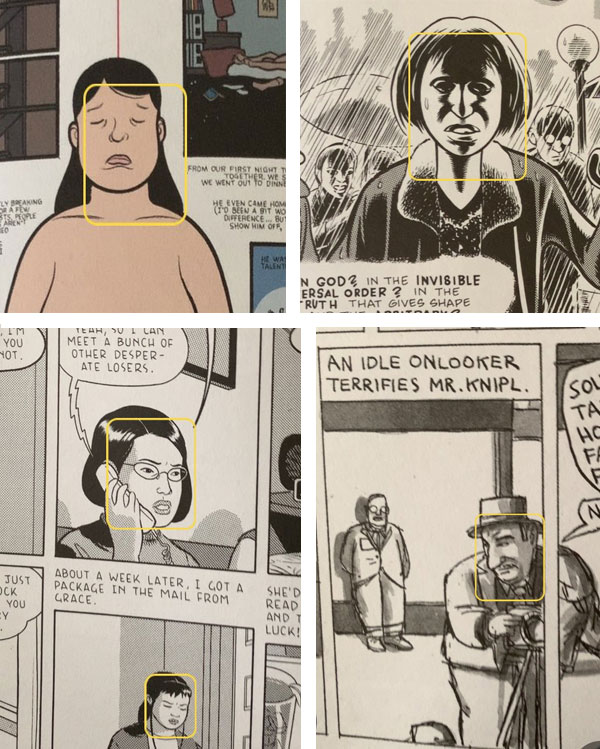
My initial hunch — that the more abstract a face is, the less chance the machine would recognize it — turns out to be generally true, but not completely.
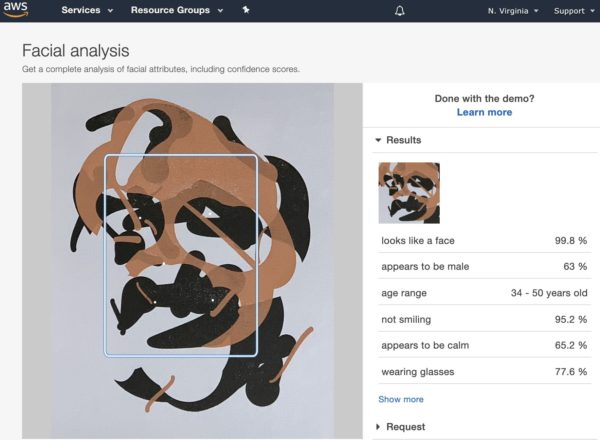
For example: @dribnet on Twitter pointed out that you can create a drawing that looks abstract to humans, but gets picked up by face detectors,” which he’s done here and here:
I don’t have anywhere that I’m going with this, I just thought it was interesting…
In a conversation with Cheryl Strayed about her book, The Secret to Superhuman Strength, the cartoonist Alison Bechdel said:
Something I thought about a lot as I was drawing this book is what a gloriously physical activity it is to draw. I draw for hours on end and it’s like an endurance exercise. There’s something physical that happens with that line coming out of my hand onto the page that is different from what I might type or do on the computer.
It is very embodied and I feel like drawing is a tracing of the world for me. I’m showing you what I’m seeing and then you’re holding it in your hands. It’s like this touch-based transmission.
For me, this fact is both the magic and the curse of comics.
One of the brutal realities for cartoonists is that drawing is such an embodied transmission that readers who are unfamiliar with your work might be initially repelled by your drawings and not be able to “get past” them to start turning the pages. (And, in fact, there really is no “getting past” the drawing of a comic — the drawing is the medium is the message.)
Comics is a labor-intensive medium, and the ratio of work put in by the maker vs. work put in by the reader is already super high. But because so much of the hand is in the work, it also has an initial visceral fail point, much like a podcast or a film: if the audience doesn’t like the narrator’s voice or the actor’s face, sometimes it’s adios before the story even begins.
This is one thing to be said for plain ol’ typeset prose: there’s very little right away on the page to repel the reader before they even dip into the work. Just words on a page, what do they say?
Now, keeping the reader reading, that’s hard no matter what medium you’re working in…
This site participates in the Amazon Affiliates program, the proceeds of which keep it free for anyone to read.