Filed under: diaries
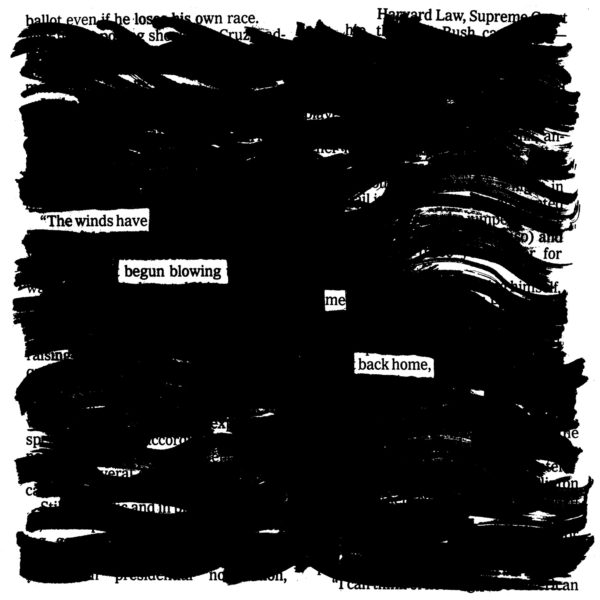
When Jane Jacobs’ sons were in danger of being drafted into Vietnam, the Jacobs family emigrated to Canada and eventually became Canadian citizens. An interviewer at Metropolis later asked if this was disruptive. Jacobs answered:
Well, it would have been disruptive if we had thought of ourselves as exiles. People who think of themselves as exiles, I find, can never really put their lives together, really. We thought of ourselves as immigrants. And it was an adventure and we were all together.
“We wanted to be a part of where we were,” she said. “Being an exile is having it fixed in your mind that you’ve just come to a place as a stop-gap measure.”
Exile worked for me until I had children. I could be in the city, but also apart from it. I could detach whenever I wanted to. I could hide out. Make my own world.
Even with babies, exile still worked. I was home with them. No need to send them anywhere. I could swaddle them up and keep them close. Pull the shades down and stay in.
Now they are growing up, and they want — they demand — to be a part of the world around them. They want to go outside and turn over every rock. They want to meet and befriend everyone on the sidewalk.
I never resent my kids, but, in my darker moments, I resent the way they have made me vulnerable to my surroundings. Suddenly, I am at the mercy of my street, my neighborhood, my city, my state, my country.
My children are natives, but I am still in exile.
It’s time to immigrate… or return home.
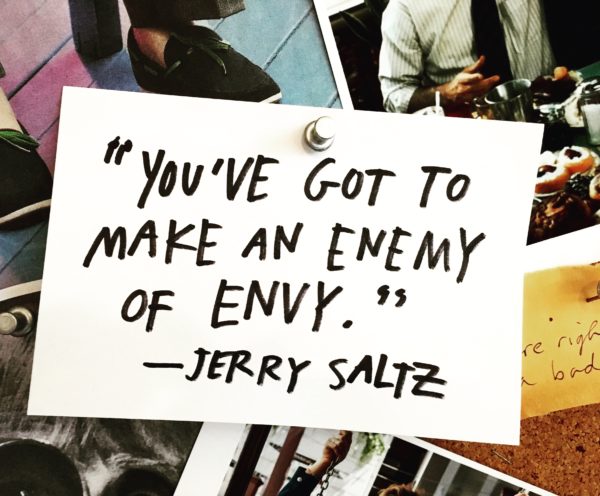
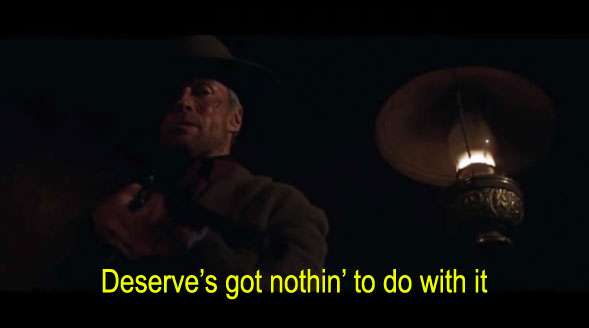
When I heard art critic Jerry Saltz say this during his Longform podcast interview, I immediately got up, wrote it down on an index card, and pinned it above my desk. (UPDATE: 4/15/2021: He writes more about it in his book, How To Be an Artist.)
In another interview, he explains:
When I was an artist, I used to walk around feeling sorry for myself, always. Looked at every loft, every apartment. Hated everyone I saw. Everyone. Hated you if you had a better apartment. Hated you if you had more hair. Hated this one for being tall. Hated that one. Everybody had it better than poor me. They had more money. Oh, I was cynical. I knew why she was getting what she got and he got what he got, and I was eaten alive by this envy. Eaten alive, and now I tell young artists and writers: “You must make an enemy of envy today. Today. By tonight, because it will eat you alive.”
I agree with him: it will eat you alive if you keep it inside. I think one thing you can do is spit it out, cut it out, or get it out by whatever means available — write it down or draw it out on paper — and take a hard look at it so it might actually teach you something.
Over at The School of Life, here’s a bit about how Friedrich Nietzsche felt envy could be useful to us:
Nietzsche thought of envy as a confused but important signal from our deeper selves about what we really want. Everything that makes us envious is a fragment of our true potential, which we disown at our peril. We should learn to study our envy forensically, keeping a diary of envious moments, and then sift through episodes to discern the shape of a future, better self…. The envy we don’t own up to will otherwise end up emitting what Nietzsche called ‘sulfurous odours.’ Bitterness is envy that doesn’t understand itself.
So, first, don’t deny your envy, and second, if you can, try to examine it.
My favorite writing on the subject of envy is the “Jealousy” chapter of Anne Lamott’s Bird By Bird. “Jealousy is one of the occupational hazards of being a writer,” she writes.
Some wonderful, dazzling successes are going to happen for some of the most awful, angry, undeserving writers you know—people who are, in other words, not you.
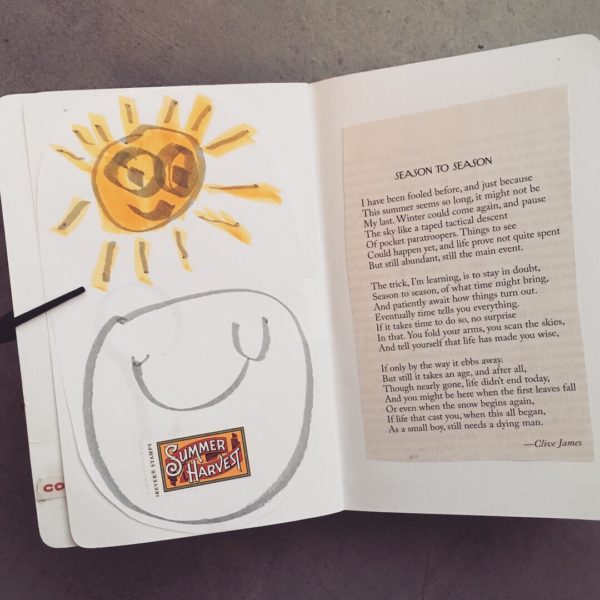
She says the only things that seem to help with jealousy are: “(a) getting older, (b) talking about it until the fever breaks, and (c) using it as material.” As an example of (c), she points out a favorite poem of mine: Clive James’ deliciously nasty poem, “The Book of my Enemy Has Been Remaindered.” It begins:
The book of my enemy has been remaindered
And I am pleased.
In vast quantities it has been remaindered
Like a van-load of counterfeit that has been seized…
The narrator of the poem goes on to admit, “Soon now a book of mine could be remaindered also,” but in his case it will be “due / to a miscalculated print run, a marketing error — / Nothing to do with merit.”
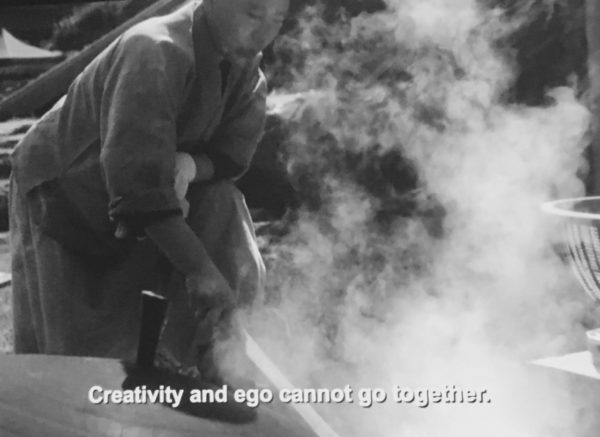
A good deal of this can be traced to problems of ego. Here’s how Zen Buddhist nun Jeong Kwan puts it in season 3, episode 1 of Chef’s Table:
Creativity and ego cannot go together. If you free yourself from the comparing and jealous mind, your creativity opens up endlessly. Just as water springs from a fountain, creativity springs from every moment. You must not be your own obstacle. You must not be owned by the environment you are in. You must own the environment, the phenomenal world around you. You must be able to freely move in and out of your mind. This is being free. There is no way you can’t open up your creativity. There is no ego to speak of. That is my belief.
Easier said than done.
You could try to practice the opposite of jealousy, which is something like the concept of “mudita”: “Mudita is word from Sanskrit and Pali that has no counterpart in English. It means sympathetic or unselfish joy, or joy in the good fortune of others.”
Easier than that, even, is to just pretend. Have a script that you rehearse and repeat when necessary.
Practice these words:
“Good for him.”
“Good for her.”
“Good for them.”
“Good for you.”
(That last one is sometimes the hardest.)
You say these words, and then you keep your head down, and you do your work.
And should you get everything you always wanted, remember the words on a pillow Joan Rivers kept in her apartment: “Don’t Expect Praise Without Envy Until You Are Dead.”
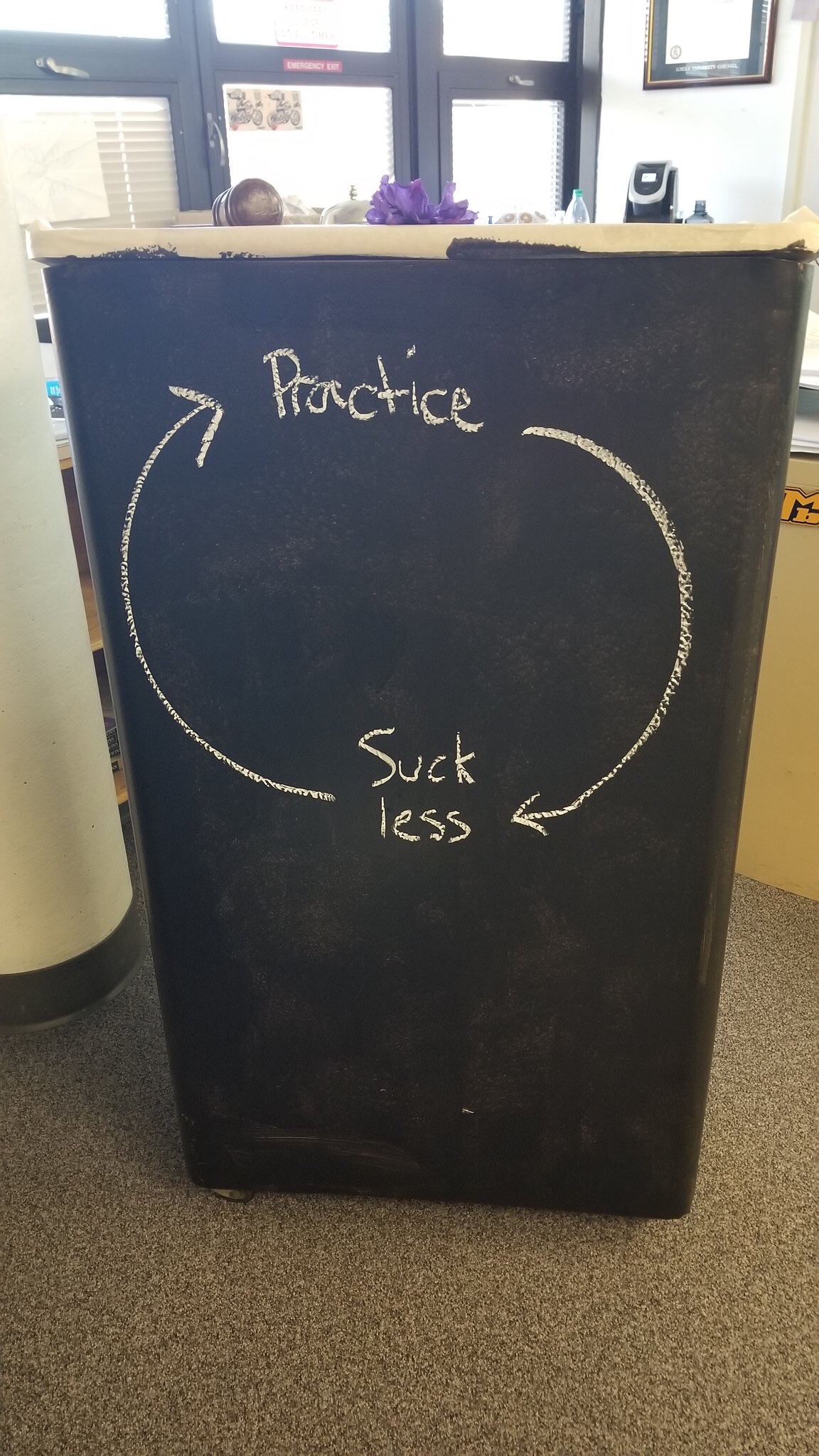
My “practice/suck less” diagram drawn on @devthomas’s chalkboard-painted podium in his 7th grade classroom. I was delighted to hear from several teachers who said they were now discussing it with their students. “This is now my teaching philsophy statement,” tweeted @toddpetersen, “in full.”
I’ve been thinking about how practice is its own skill — that once you learn to practice, you can transfer that skill to almost anything else.
A few years ago, I tweeted, “Lots of people decide to train for a marathon and just go out and do it. Why not chose to have better handwriting? Or play the piano?” And @aribraverman tweeted back, “Actually, training for a marathon, going out every day… has helped me be better/braver at being new at things…. Started to learn French, learned to ride a motorcycle. Running helped me not stress/expect to be perfect right away.”
There are other lessons that practice teaches. Here is Liz Danzico on learning to play music:
Learning to play music is an long exercise learning to to be kind to yourself. As your fingers stumble to keep up with your eyes and ears, your brain will say unkind things to the rest of you. And when this tangle of body and mind finally makes sense of a measure or a melody, there is peace. Or, more accurately, harmony. And like the parents who so energetically both fill a house with music and seek its quietude, both are needed to make things work. As with music, it takes a lifetime of practice to be kind to yourself. Make space for that practice, and the harmony will emerge.
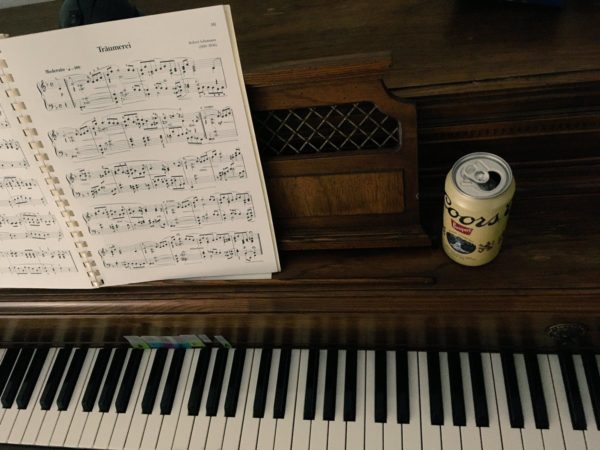
Here is my not-so-classroom-friendly image of practice. (The piece is Schumann’s “Träumerei.”)
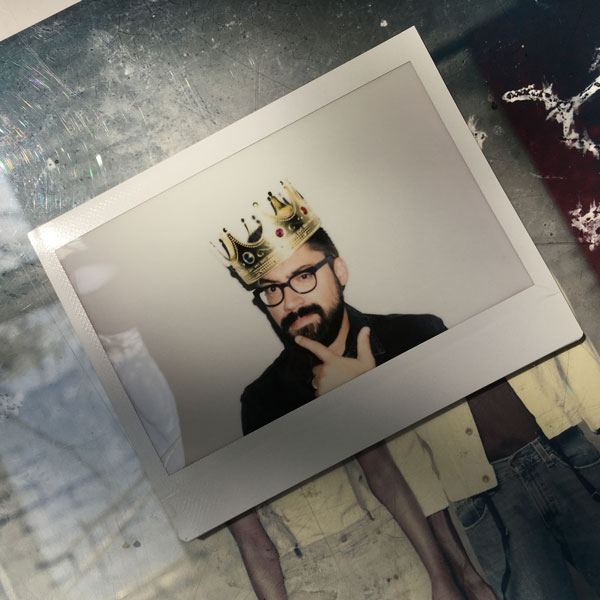
I needed new some new photos, so I asked one of my favorite artists, Clayton Cubitt, if he’d take them. We spent a couple of really pleasant hours last month in his studio in Williamsburg, just chatting about art and life and taking pictures.
Clayton likes to take a polaroid of studio visitors wearing a prop crown — he says he thinks everybody deserves to be royalty for at least a few minutes. (Iggy Pop: “Every stinking bum should wear a crown.”)
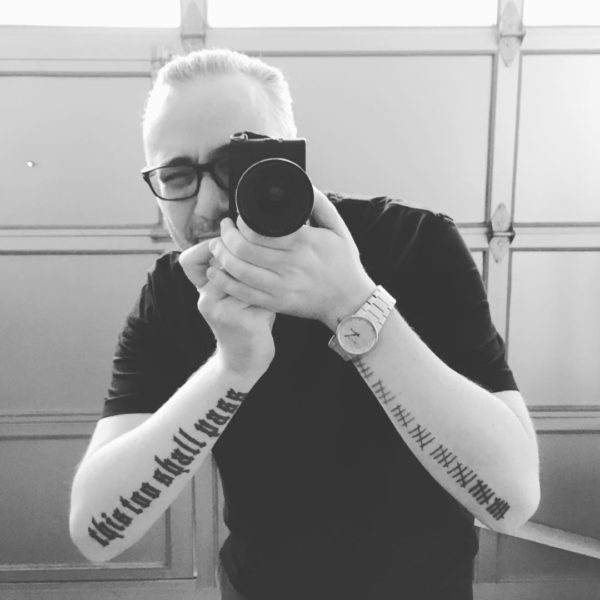
Here’s a photo I took of him in action — the tattoo on his right arm, “this too shall pass,” was explained by Abraham Lincoln (a quote I used in the last chapter of Keep Going):
“It is said an Eastern monarch once charged his wise men to invent him a sentence to be ever in view, and which should be true and appropriate in all times and situations. They presented him the words, “And this too, shall pass away.” How much it expresses! How chastening in the hour of pride! How consoling in the depths of affliction!”
“Sometimes I worry it’s weird for my subjects to see a giant ‘this too shall pass’ tattoo on my trigger arm,” he says, “But it’s true and it’s why I photograph.”
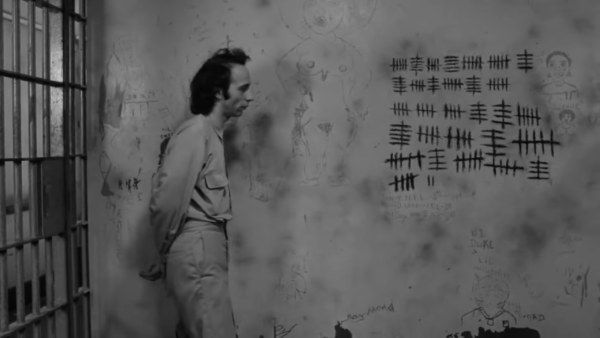
He gets a new hatchmark on his left arm for each year he makes it around the sun.
You can read more about his life and work in this interview.
Here’s my favorite photo that he took of me:

This site participates in the Amazon Affiliates program, the proceeds of which keep it free for anyone to read.