I love maps. I love looking at maps and I love thinking about maps and I love collecting maps.
When I was studying at Cambridge, I was writing essays for my tutor about Dickens and Dostoevsky, and they were just awful. I think my tutor thought I was a moron. (Or just an American student. Same thing.) Then one day I came in with a rough hand-drawn map of the London in Dickens’ Our Mutual Friend. He said my scribbled map was the best work I’d done.
I knew then, I think, that my talent was going to be for using pictures and words together, and maps would serve as useful inspiration. A decade ago, I published a blog post collecting a bunch of fictional maps, and I’m thinking of them again, thanks to a beautiful new book, The Writer’s Map: An Atlas of Imaginary Lands.
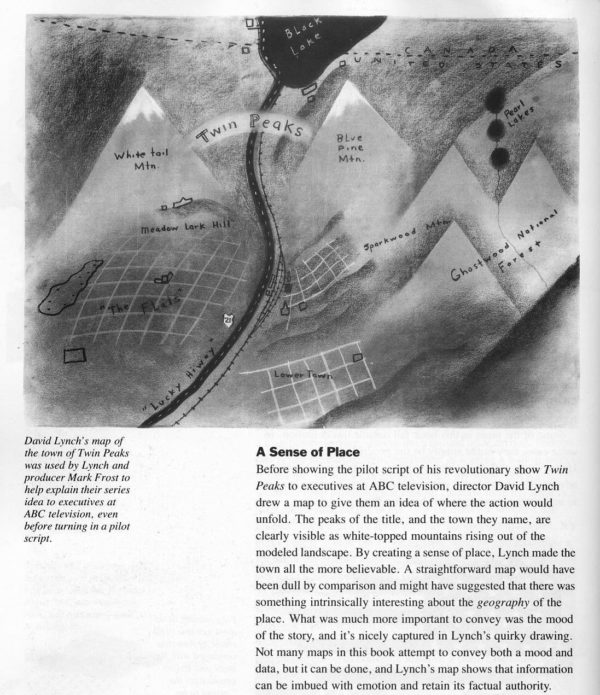
A few bedtimes ago, both the 5-year-old and I were just lying in his bed looking at maps and talking about him. A rare moment of bliss. (His book was entitled, simply, Maps.)
A while back I read an article about how to you have to get children to fall in love with the world before you ask them to save it. (Gary Snyder: “The first step, I think… is to make us love the world rather than to make us fear for the end of the world. Make us love the world… and then begin to take better care of it.”)
Part of the author’s research was looking at maps children of different ages make of their worlds. He describes the cartography of the different age groups:
From ages four to seven, children’s homes fill the center of their maps, and much of their play is within sight or earshot of the home. Children often describe the worms, chipmunks, and pigeons that live in their yards or on their blocks, and they feel protective of these creatures.
From eight to eleven, children’s geographical ranges expand rapidly. Their maps push off the edge of the page, and they often need to attach extra pieces of paper to map the new terrain they are investigating. Children’s homes become small, inconsequential, and often move to the periphery of the map. The central focus in their maps is the “explorable landscape.”
From 12 to 15, the maps continue to expand in scope and become more abstract, but the favored places often move out of the woods and into town. Social gathering places such as the mall, the downtown luncheonette, and the town park take on new significance.
As Michael Chabon once put it, “Childhood is a branch of cartography.”
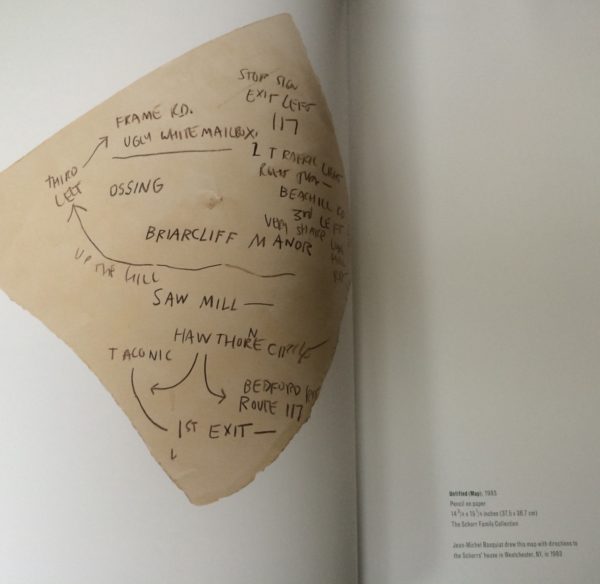
Here’s Rebecca Solnit talking about why she loves paper maps (author of, among other books, A Field Guide to Getting Lost and Infinite City: A San Francisco Atlas):
Maps are ubiquitous in one sense, and completely missing in another. A lot of younger people don’t own maps and atlases and don’t have the knowledge a map gives you. We call things like MapQuest and Google Maps on your phone interactive… but are they? Are they interactive? It’s a system that largely gives you instructions to obey. Certainly, obedience is a form of interaction. (Maybe not my favorite one.) But a paper map you take control of — use it as you will, mark it up — and while you figure out the way from here to there yourself, instead of having a corporation tell you, you might pick up peripheral knowledge: the system of street names, the parallel streets and alternate routes. Pretty soon, you’ve learned the map, or rather, you have — via map — learned your way around a city. The map is now within you. You are yourself a map.
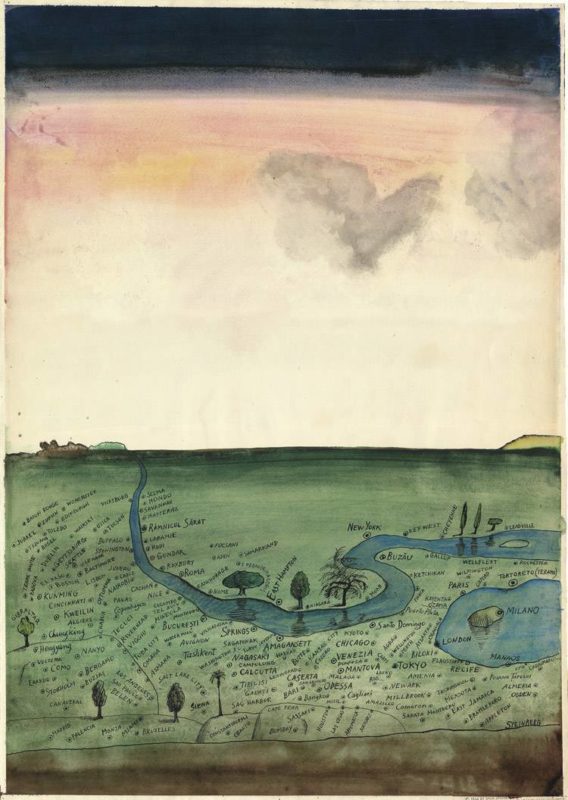
Many of my favorite artists use maps in their work. Saul Steinberg is famous for his view of New Yorker provincialism, but he drew tons of other maps, including the one above, which was never actually published in his lifetime. Beautiful.
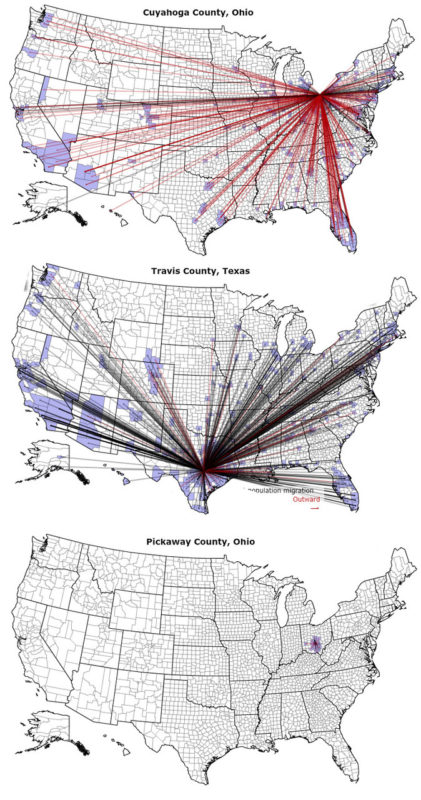
“Maps are arguments,” says Denis Wood. Maps tell stories. (They can also lie.)
Years ago, I found this online migration map that shows you how people move in and out of different counties.
Three maps that tell three stories.
The top map is Cleveland, where I used to live. Everybody’s leaving. It looks like an explosion.
The middle map is Austin, where I live now. Everybody’s moving here. It looks like a black hole.
The bottom map is Pickaway County, Ohio, where I grew up. Hardly anyone leaves. Hardly anyone moves in. It looks like a puddle.
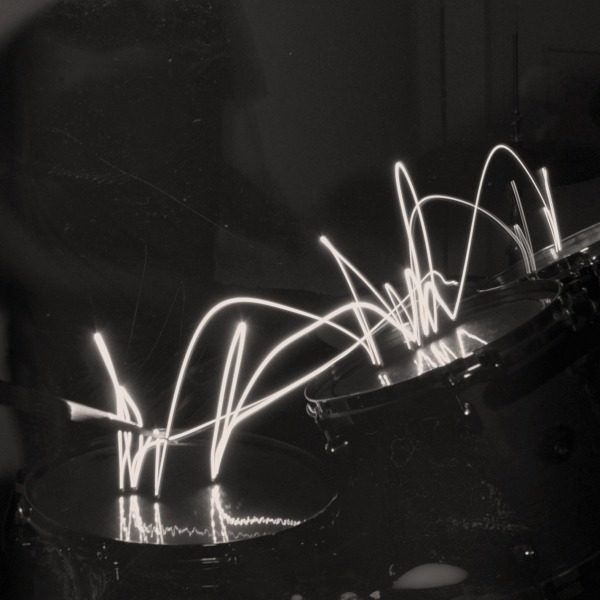
I’m interested in how maps can move beyond geography towards mapping other things in the world. Here’s one of my favorite maps of all-time, from a 2005 Harper’s:
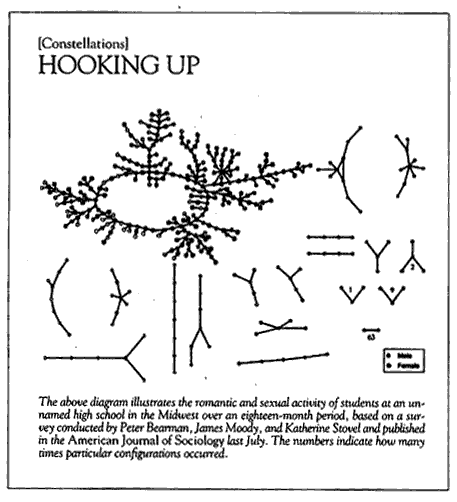
I love looking at those diagrams and thinking about the stories behind them. (For example, where is the single dots, depicting the virgins?)
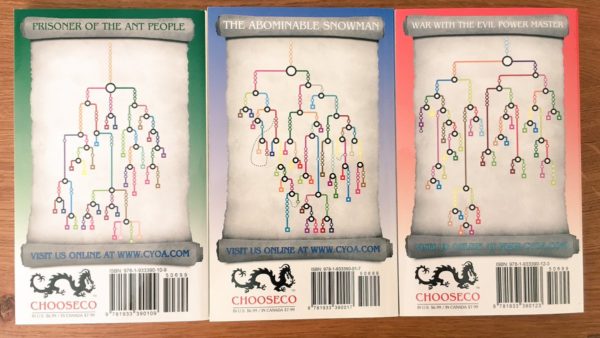
Just this week I became obsessed with the plot maps on the back of new editions of the Choose Your Own Adventure series:
Around the same time I got interested in maps, I discovered “mind mapping,” and started making my own mind maps of the books I was reading:
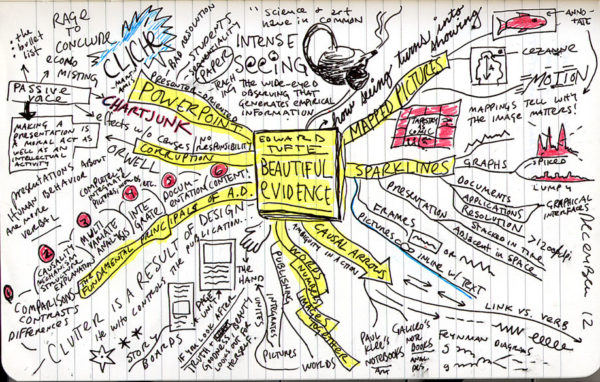
When pictures and words are laid out in the same space — broken out of the linearity of normal type — you can see new relationships between them and come up with new ideas. I find this kind of drawing with pictures and words to often be way more powerful than simply writing longhand.
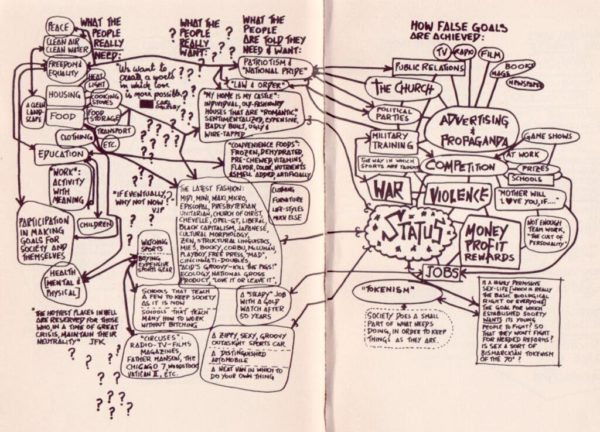
Years ago, I read Peter Turchi’s Maps of the Imagination, and it had a big impact on me. (I later got to interview him about his work.) Turchi suggests that writers are cartographers, in a sense: they help people figure out where they are in the world.
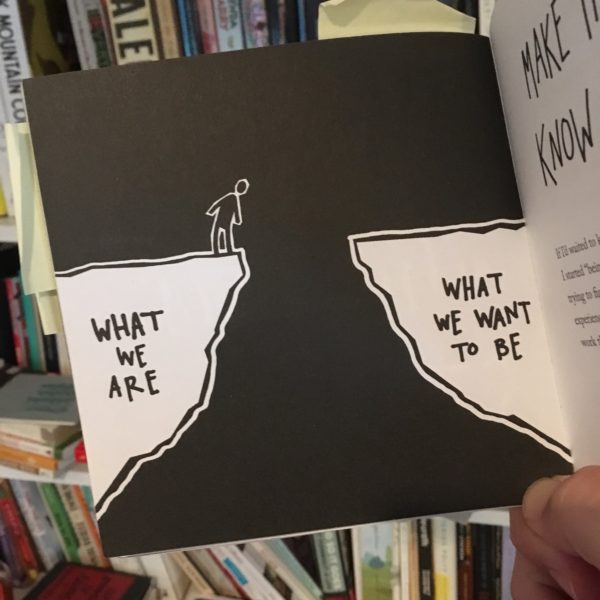
I continue to be taken with this idea. I think of my books as way-finding devices: they show you how to get from where you are to where you want to be.