Q: “Who has time for that?”
A: “People who make time for that.”
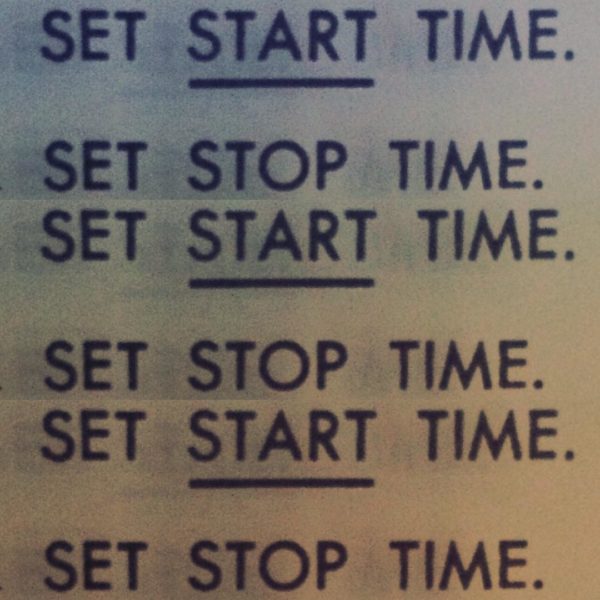
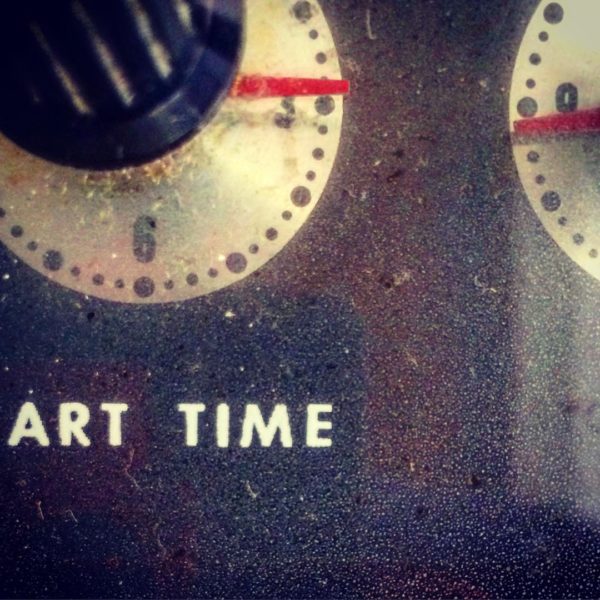
Above: art-making advice from our 40-year-old ovens.
Q: “Who has time for that?”
A: “People who make time for that.”
Above: art-making advice from our 40-year-old ovens.
On March 24, 1857, Thoreau journaled about memory, and how the passing of time serves as a filter for what is good or interesting:
If you are describing any occurrence, or a man, make two or more distinct reports at different times. Though you may think you have said all, you will to-morrow remember a whole new class of facts which perhaps interested most of all at the time, but did not present themselves to be reported.
On March 27, three days later, true to the topic, he polished his thoughts on the subject:
I would fain make two reports in my Journal, first the incidents and observations of to-day; and by to-morrow I review the same and record what was omitted before, which will often be the most significant and poetic part. I do not know at first what it is that charms me. The men and things of to-day are wont to lie fairer and truer in to-morrow’s memory.
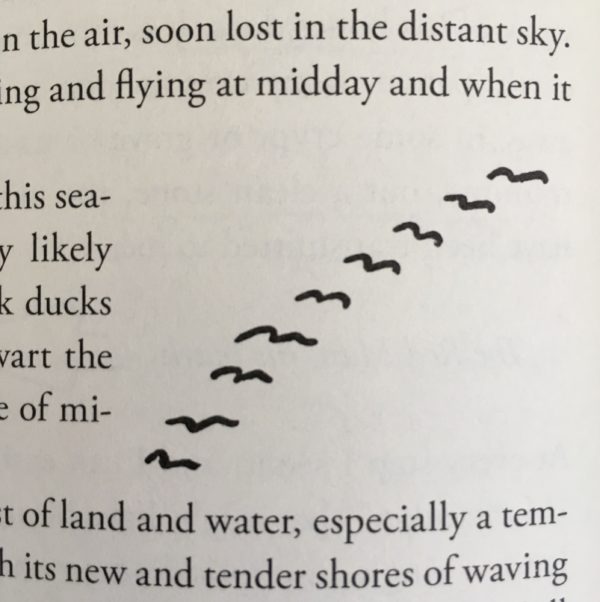
Above: Thoreau’s drawing of geese in formation, March 28, 1859
One of my favorite little Twitter bots is @year_progress, which tweets every 3.65 days when 1% of the year goes by:
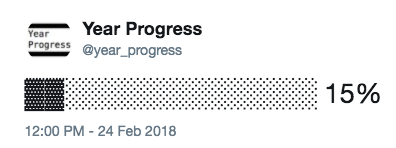
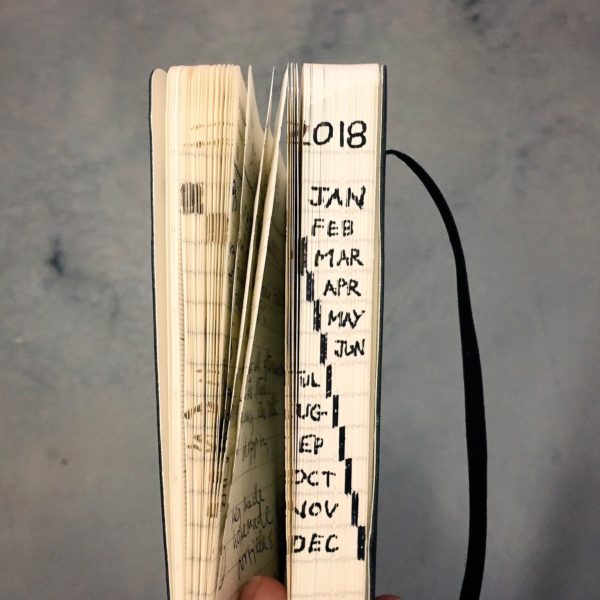
I have my own analog version on the edges of my page-a-day logbook. One of the first things I do at the beginning of the year is make a little index system for the months. I like having another visual of how the year is progressing. (Here’s the notebook I use, and a similar index system.)
See also: How much of the year is left?
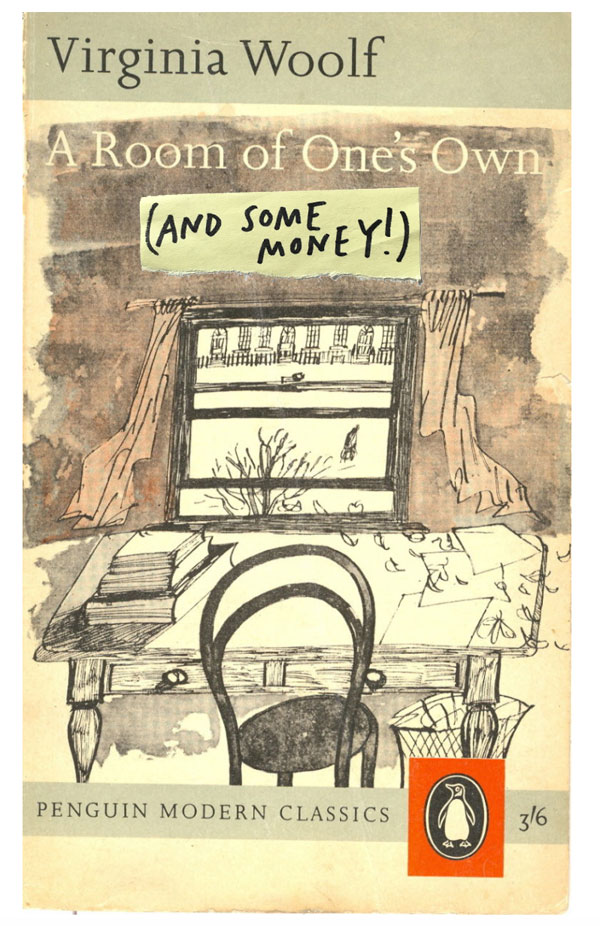
In 1928, Virginia Woolf was invited to give a talk at a couple of women’s colleges at Cambridge University on the subject of “Women and Fiction.” Her long essay, A Room of One’s Own, is an extended version of those talks, published in 1929.
It’s a remarkable essay that reads like it could’ve been written yesterday. Woolf’s thesis is very simple, outlined within the first couple of paragraphs: “a woman must have money and a room of her own if she is to write fiction.” A writer needs money to provide her with the time, and she needs room to provide her with the space. (Not just physical, but also mental, emotional, spiritual, etc.)
Woolf emphasizes how books don’t come out of thin air, that they “are the work of suffering human beings, and are attached to grossly material things, like health and money and the houses we live in.” You cannot detach art-making from the context of the condition of the lives of the artists. “Intellectual freedom,” she says, “depends upon material things. Poetry depends upon intellectual freedom. And women have always been poor, not for two hundred years merely, but from the beginning of time.”
Woolf herself was freed up to write when her aunt died suddenly and left her an inheritance:
The news of my legacy reached me one night about the same time that the act was passed that gave votes to women. A solicitor’s letter fell into the post-box and when I opened it I found that she had left me five hundred pounds a year for ever. Of the two—the vote and the money—the money, I own, seemed infinitely the more important.
She lists all the “odd jobs” she had to do, and how they bred in her “fear and bitterness” from always “doing work that one did not wish to do.” She says working was soul-killing, like “rust eating away the bloom of the spring, destroying the tree at its heart.” But when her aunt died, things changed:
[W]henever I change a ten-shilling note a little of that rust and corrosion is rubbed off, fear and bitterness go. Indeed, I thought, slipping the silver into my purse, it is remarkable, remembering the bitterness of those days, what a change of temper a fixed income will bring about. No force in the world can take from me my five hundred pounds. Food, house and clothing are mine forever.
It is curious to me how often, when people quote Woolf, they quote the room part and leave out the money part — especially when you consider that money buys you both the time and the space. (Ian Svenonius points out that The Clash sang, “We’re a garage band!” but, he asks, “Who can afford a garage anymore?”) A room of one’s own is nice, but if you can’t buy the time to sit in it, what good does it do you?
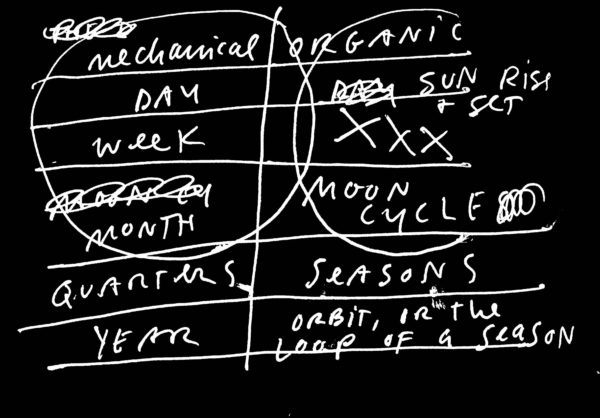
Last August I wrote about my belief in creative seasons, and after I read Matt Thomas’s great post about trying to live with the seasons, I doodled this little chart in my notebook, trying to map some of the markers of “clock time” to organic things that happen in nature, wondering if I could learn something by paying attention to them. Right away, you can see that the week is manmade, and therefore, so is the week-end, and with it, the “Sunday Blues” and other neuroses, which Witold Rybczynski writes about so well in Waiting For The Weekend.
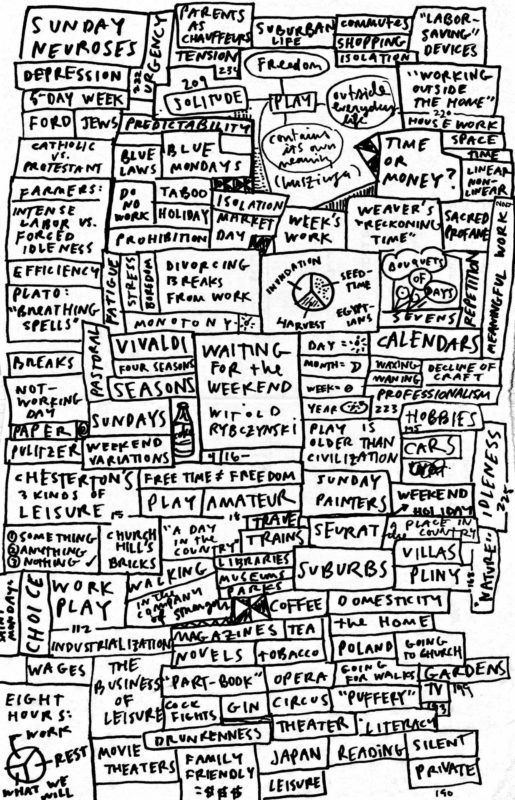
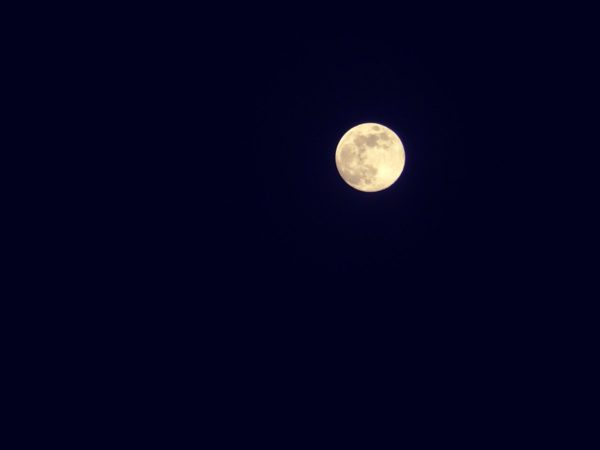
Other bits of clock time map approximately to nature’s doings. I find that the moon phases, for example, are much more interesting than months when tracking my own creative time. (Yes, I’ve become the kind of person who can guess what phase of the moon it is just by how shitty I feel.)
Still, the months are different characters that do different things for me, and it’s now October, my favorite month, and it feels a lot like how Henry David Thoreau described it, in a journal entry, dated November 14, 1853:
October is the month of painted leaves, of ripe leaves, when all the earth, not merely flowers, but fruits and leaves, are ripe. With respect to its colors and its season, it is the sunset month of the year, when the earth is painted like the sunset sky. This rich glow flashes round the world. This light fades into the clear, white, leafless twilight of November, and whatever more glowing sunset or Indian summer we have then is the afterglow of the year. In October the man is ripe even to his stalk and leaves; he is pervaded by his genius, when all the forest is a universal harvest, whether he possesses the enduring color of the pines, which it takes two years to ripen and wither, or the brilliant color of the deciduous trees, which fade the first fall.
I’m reminded of a sign you see in craft stores in Texas: “Happy fall, y’all.”
This site participates in the Amazon Affiliates program, the proceeds of which keep it free for anyone to read.