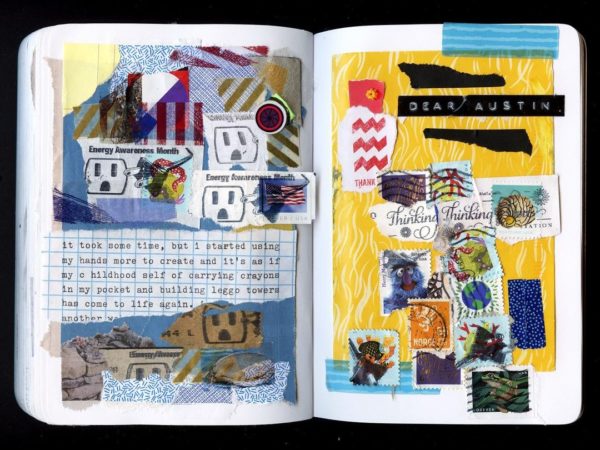
It’s bad enough I can’t write back to everyone who writes me, but I feel really weird throwing out nice letters after I read them, so sometimes I’ll open my diary and paste little bits from each piece of mail I read as I go.
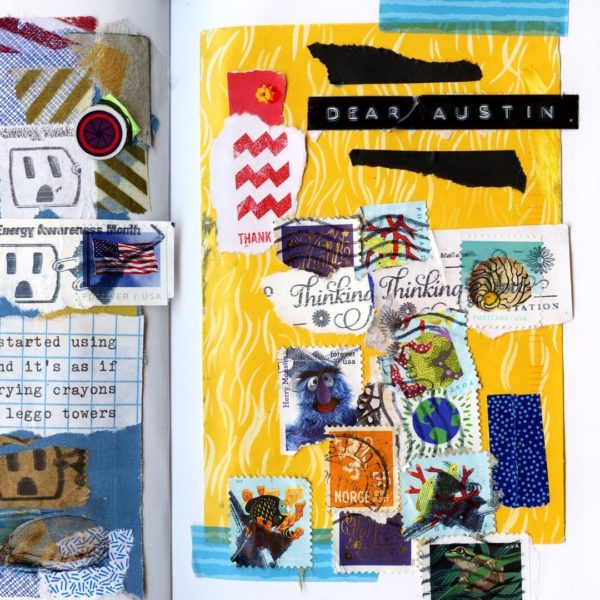
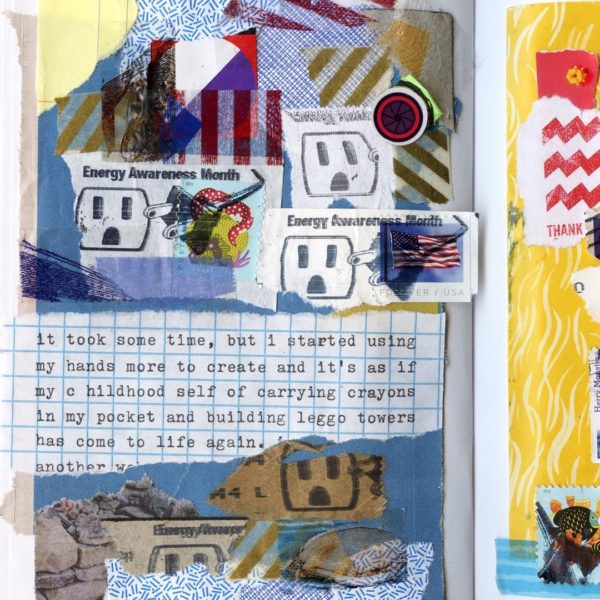
It’s bad enough I can’t write back to everyone who writes me, but I feel really weird throwing out nice letters after I read them, so sometimes I’ll open my diary and paste little bits from each piece of mail I read as I go.
In response to my “Keep calm and make ugly art” post, @duaneking sent me this great quote from designer Paula Scher on trends:
If you look through design history and you see something that looks really radical, that’s what you’re going to be doing now. If you think that’s nice, that’s what you’ve already been doing. If you think it’s tired, that’s what you were doing five years ago. But if you think it’s ugly, that’s what you’re going to be doing in five years.
I love this idea and it reminds me: My favorite character in The Good, The Bad, and The Ugly is The Ugly. Tuco’s not boring and he’s not evil. He’s not tragic, he’s comic. He’s not heroic, he’s picaresque. He might not win, but he will survive…
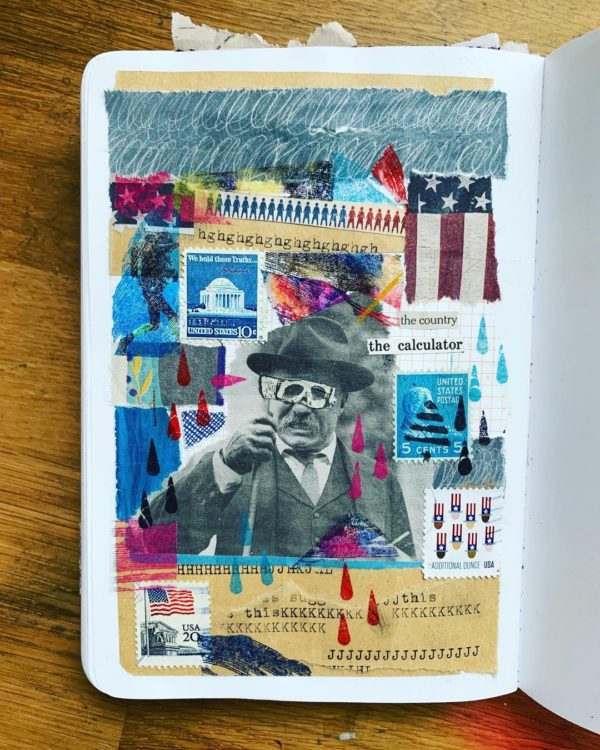
In his latest newsletter, L.M. Sacasas writes about the “emotional roulette” of checking social media. “You never quite know what news you’ll encounter and how it will mess with you for the rest of the day.”
Worse is “doomscrolling,” the endless surfing we do “when we give ourselves over to the flood of information and allow it to wash over us.”
Whatever else one may say about doomscrolling, it seems useful to think of it as structurally induced acedia, the sleepless demon unleashed by the upward swipe of the infinite scroll (or the pulldown refresh, if you prefer). Acedia is the medieval term for the vice of listlessness, apathy, and a general incapacity to do what one ought to do; ennui is sometimes thought of as a modern variant. As we scroll, we’re flooded with information and, about the vast majority of it, we can do nothing … except to keep scrolling and posting reaction gifs. So we do, and we get sucked into a paralyzing loop that generates a sense of helplessness and despair.
In his essay about Iago in the The Dyer’s Hand and Other Essays, W.H. Auden makes this life-changing distinction: Instead of asking yourself, “What can I know?” ask yourself, “What, at this moment, am I meant to know?”
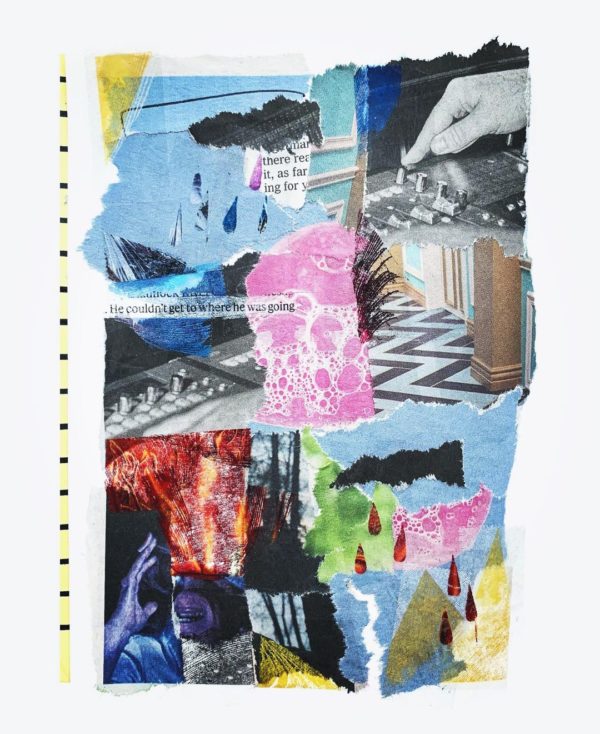
I’m usually good at avoiding doomscrolling and the Pavlovian pull and release of refreshing Twitter (ever notice how there’s very rarely anything refreshing about refreshing?), but the election has destroyed most of my willpower. I’ve been busying my hands with The Cube and soothing my brain with the calm of collage, especially “ugly” ones like this one:
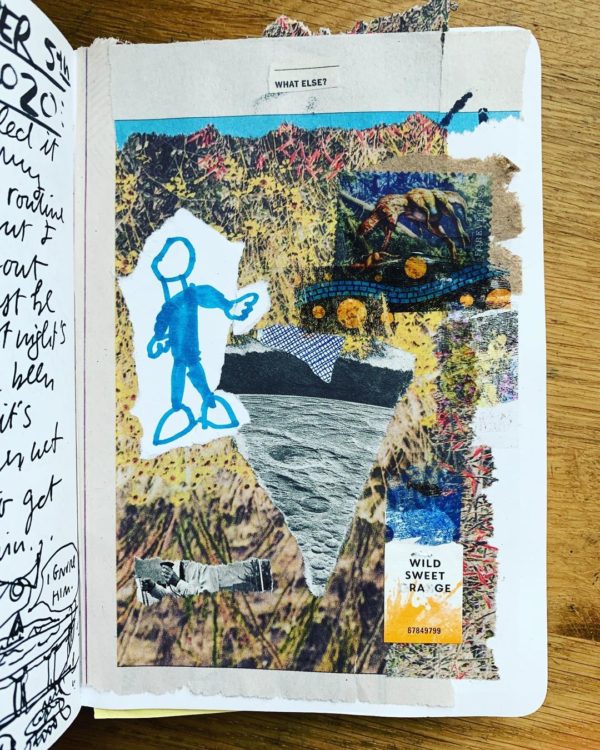
Some kind souls on Twitter said, “How do you consider this to be ugly?” The product might not end up ugly, but the process is my attempt to make ugly or “bad” art, which I think is often much more fun and more helpful than trying to make “good” art. (“Every time we make a thing, it’s a tiny triumph.”)
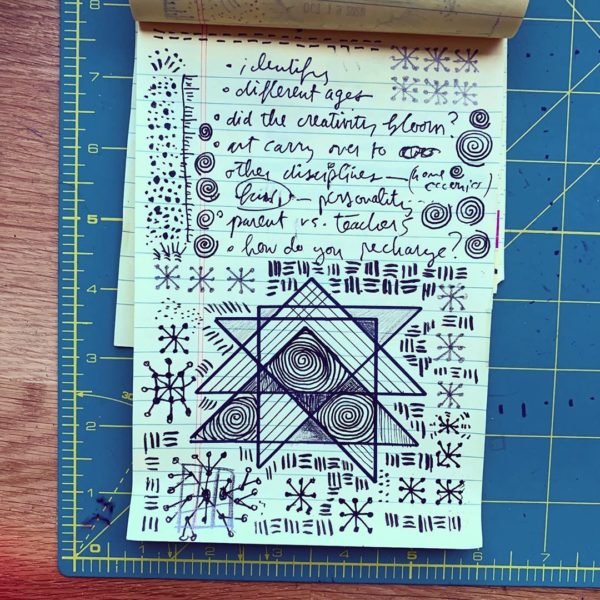
I’ve also been doing a lot of doodling on notepads. (In addition to all my notebooks, I keep one of these little legal pads on my desk for random notes.) Drawing is something to do and it is part of a cure and when you draw the world becomes a little bit more beautiful. (If you need some guidance, try a blind contour drawing or my friend Wendy MacNaughton’s four drawing exercises to help with a hard day.)
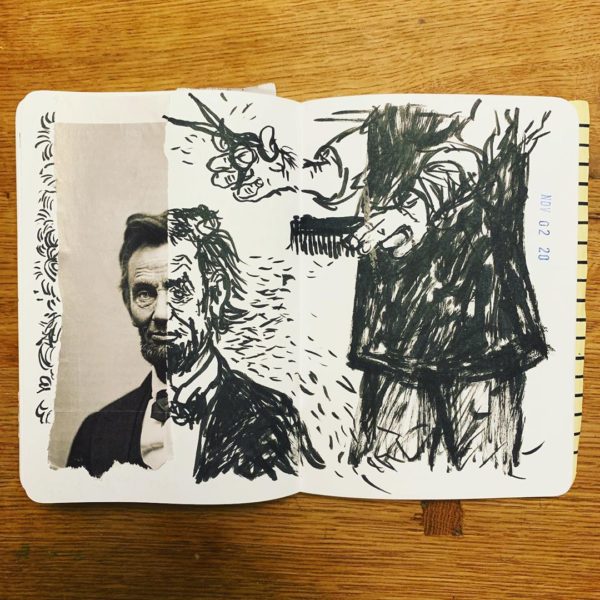
Here I’ve combined collage and drawing: I ripped a picture of Abe Lincoln in half, pasted one half in my notebook, and as I was copying the second half, got the idea to make his hair shaggy… and then add a barber? Who knows where these images come from…
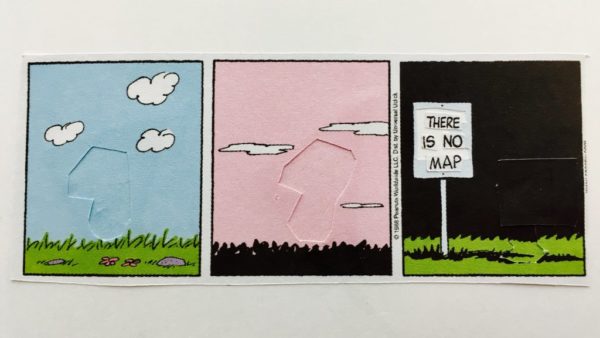
It’s the 70th birthday to Charles Schulz’s Peanuts, one of the greatest works of American art. (The very first strip ran on Oct. 2, 1950.) In celebration, I thought I’d post a batch of my remixed Peanuts strips I make in my diary, which are made from cut-up Page-A-Day calendars I buy every year. Be forewarned: They’re pretty weird.
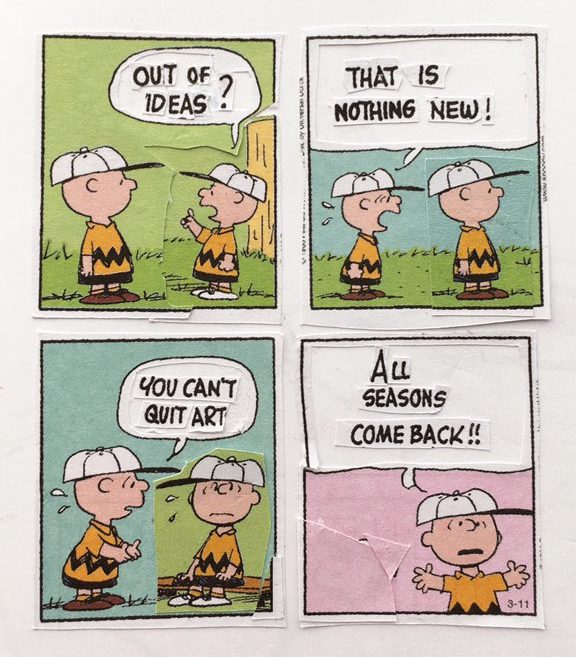
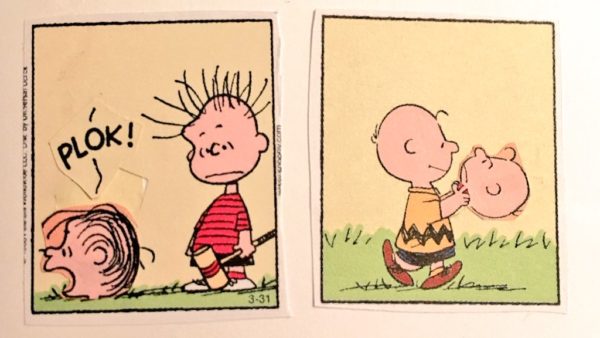
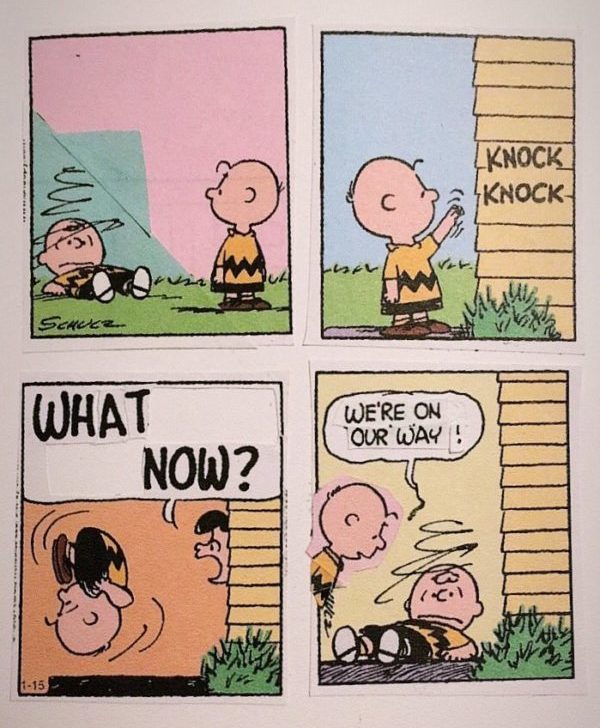
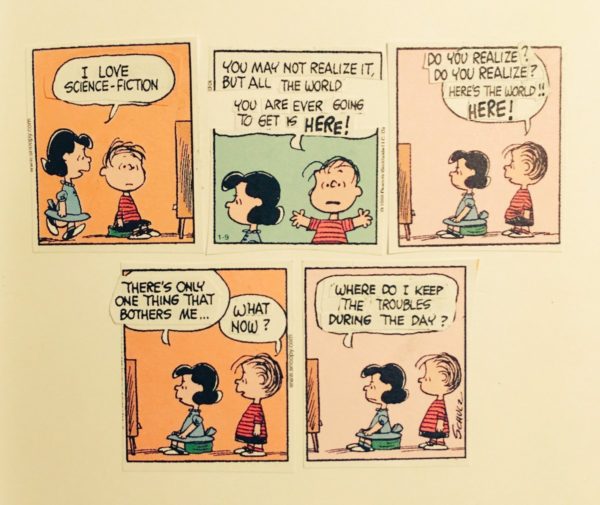
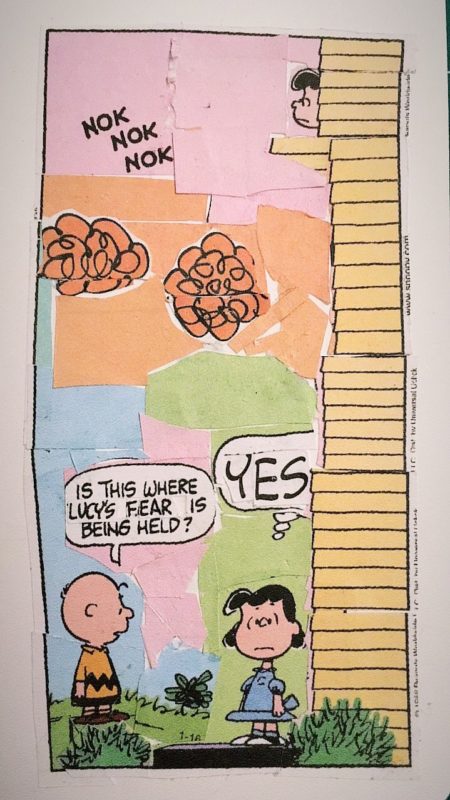
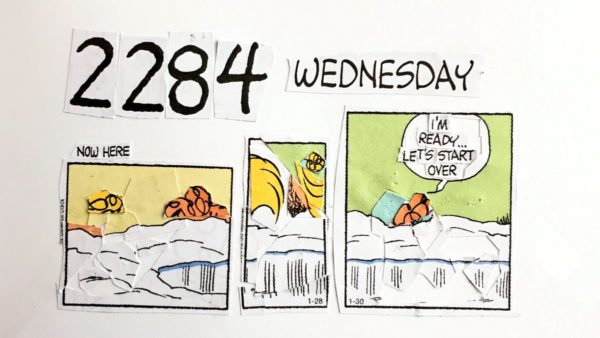
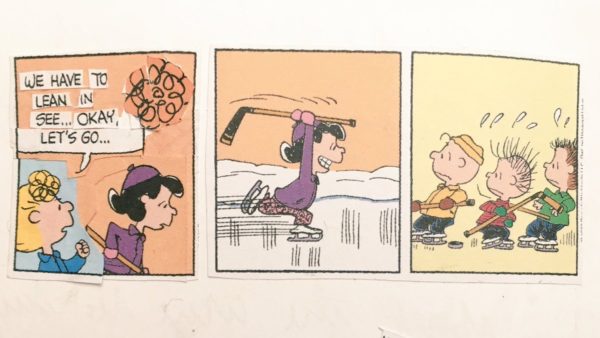
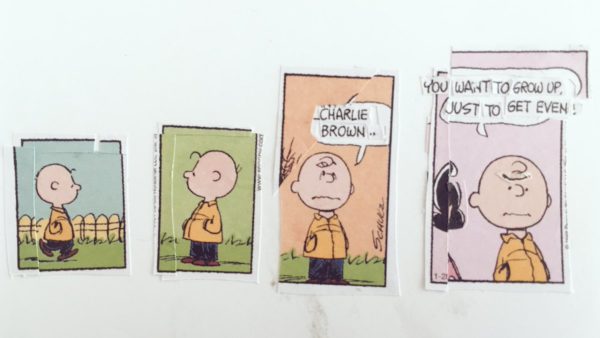
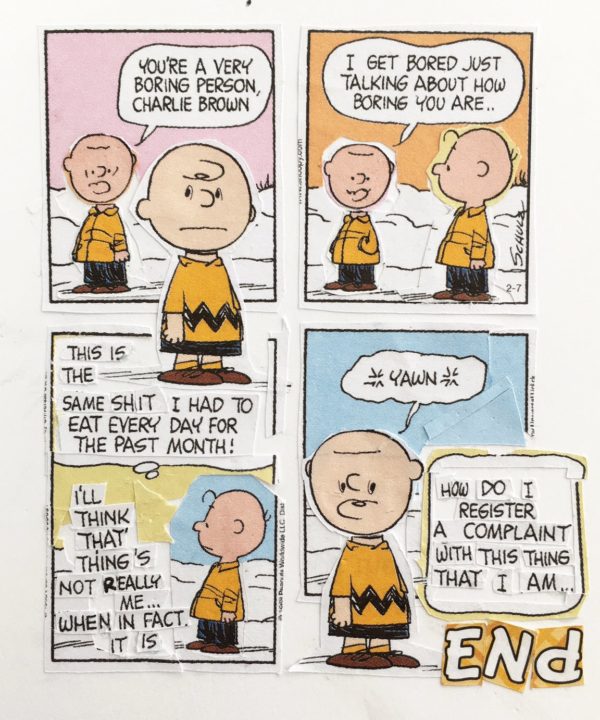
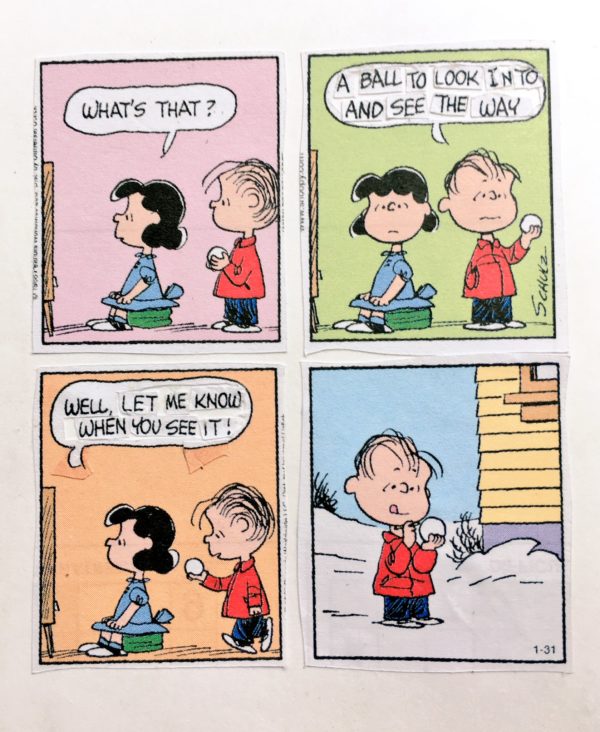
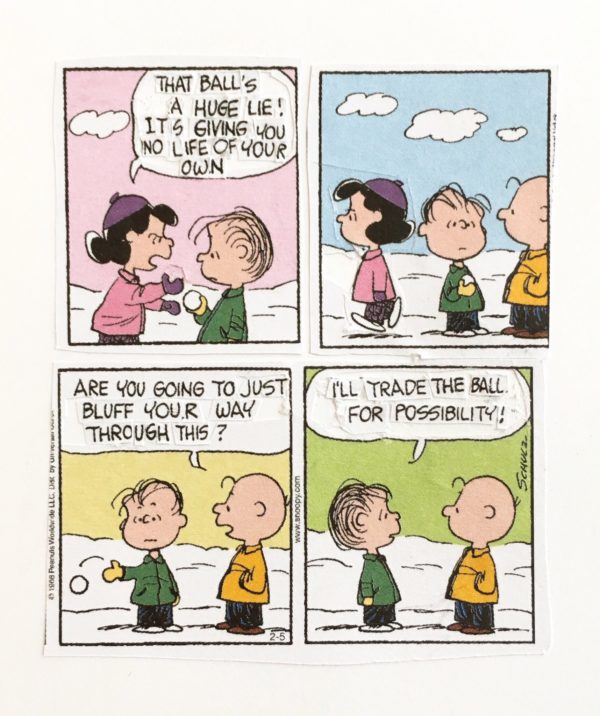
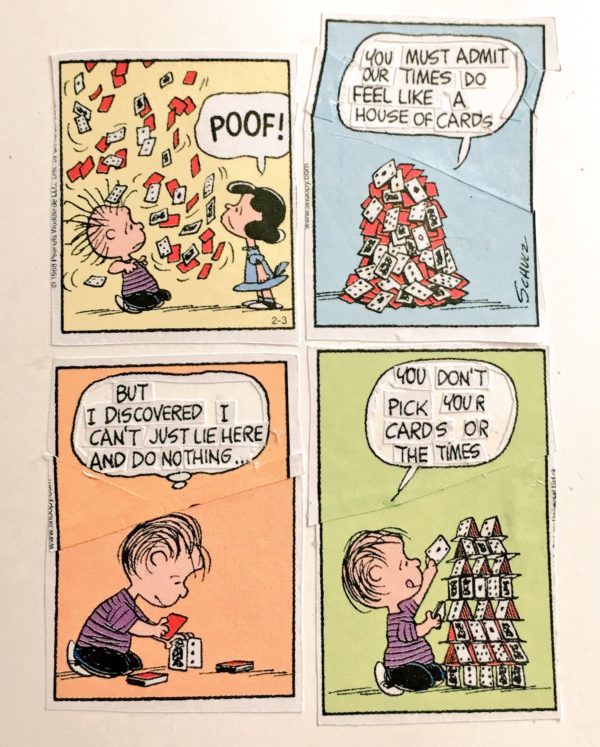
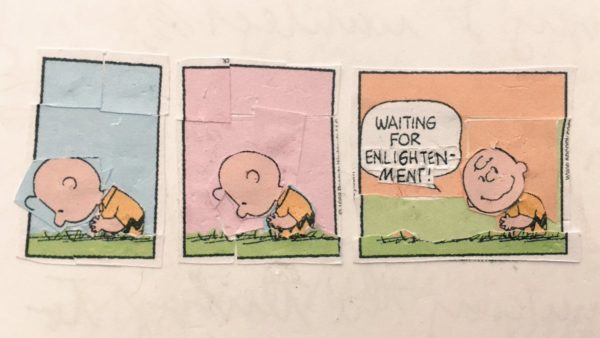
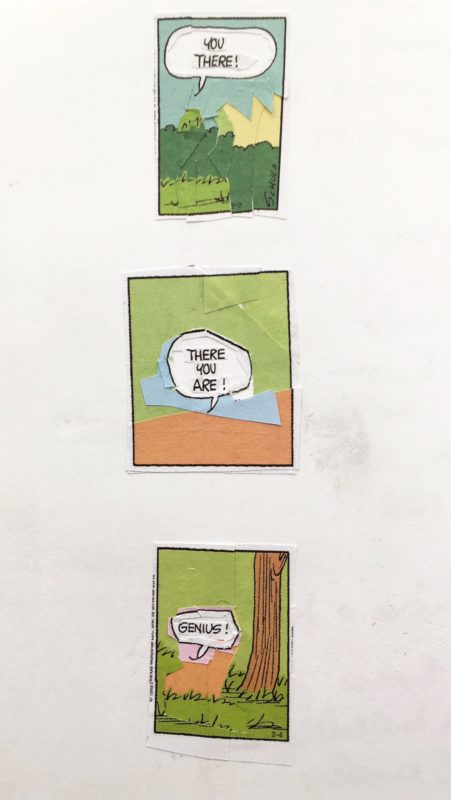
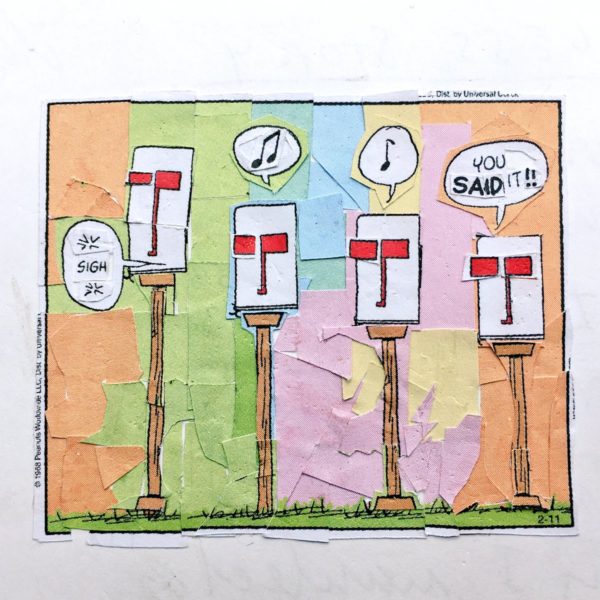
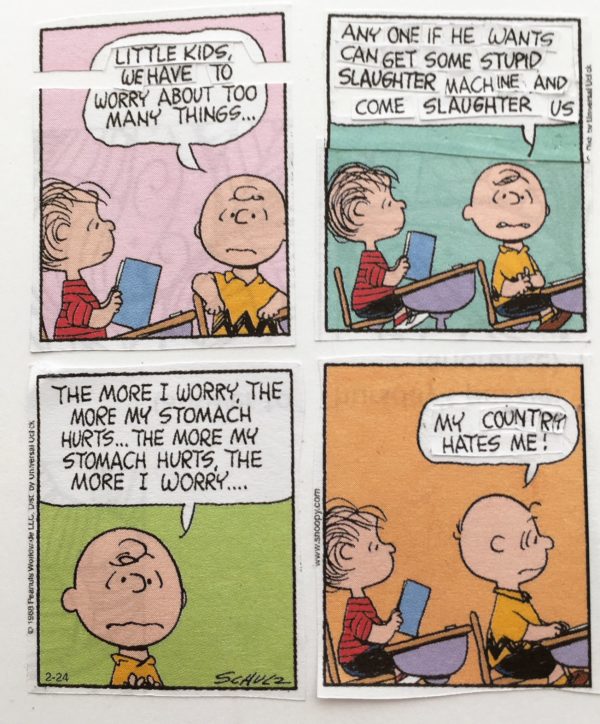
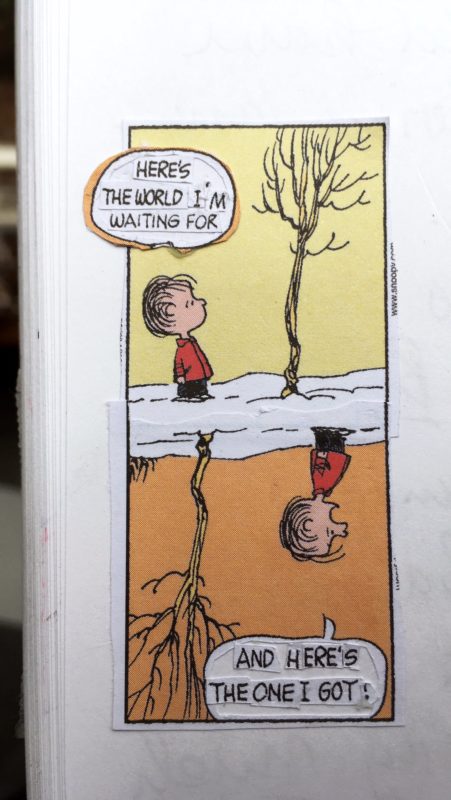
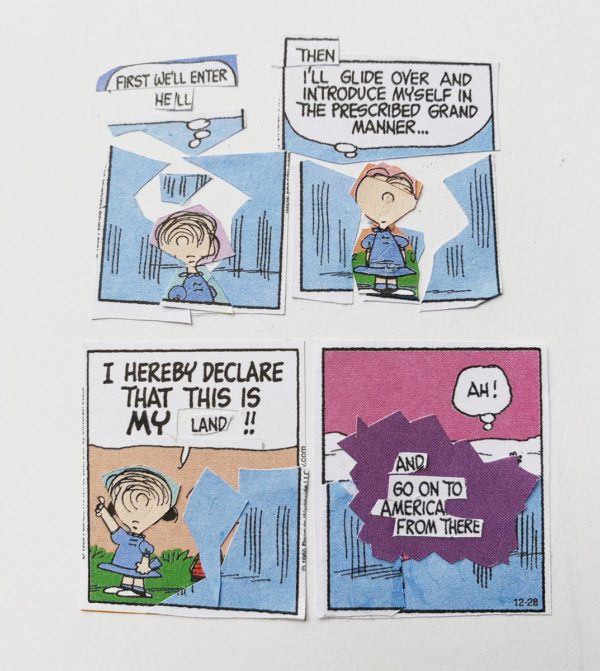
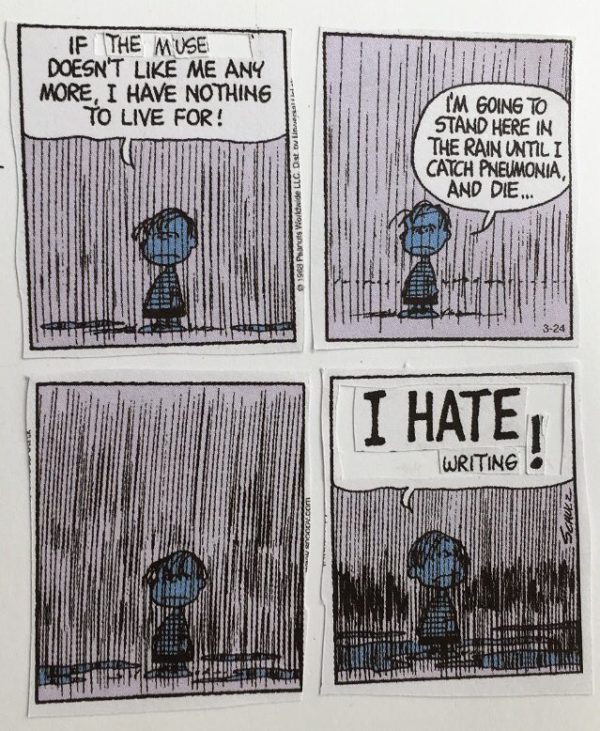
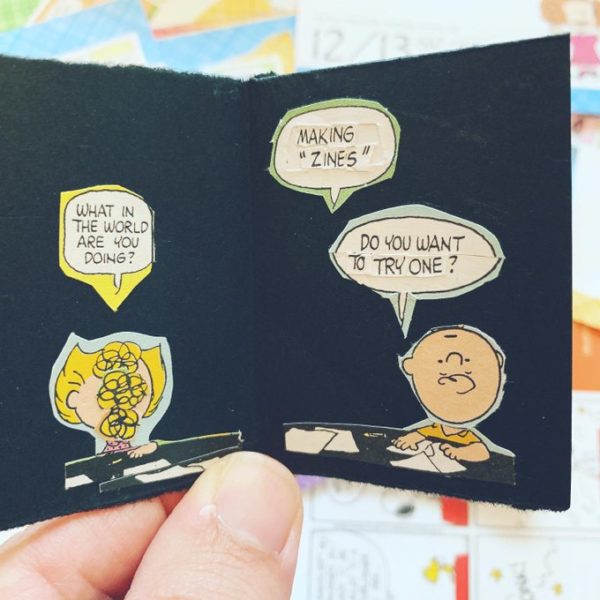
Links to four zines worth of them:
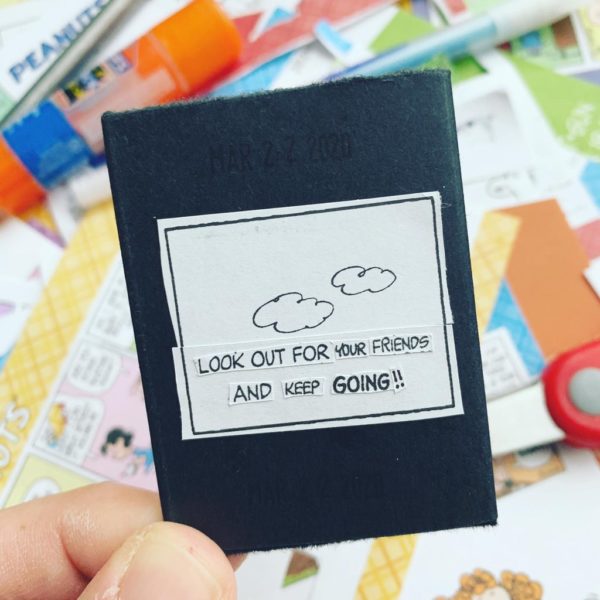
See also: “Cutting and pasting the comics”
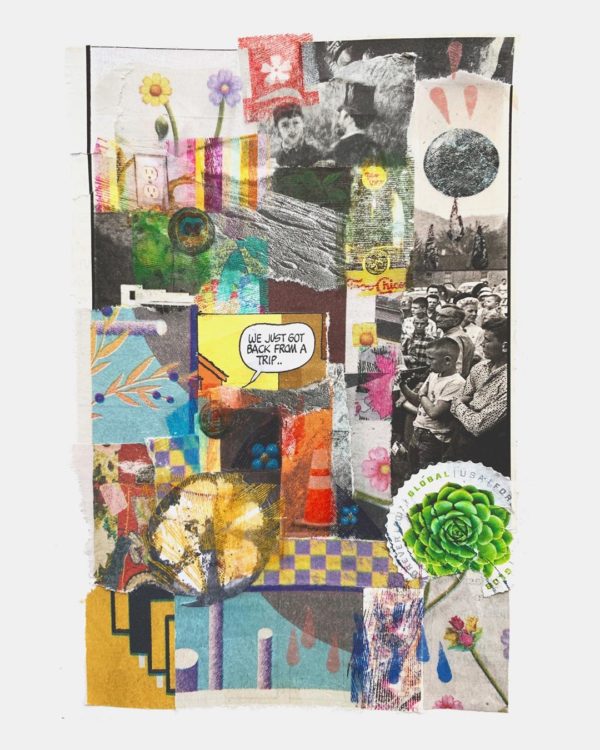
I have been thinking all week about this advice from Oliver Burkeman’s last column for The Guardian, “eight secrets to a (fairly) fulfilled life”:
When stumped by a life choice, choose “enlargement” over happiness. I’m indebted to the Jungian therapist James Hollis for the insight that major personal decisions should be made not by asking, “Will this make me happy?”, but “Will this choice enlarge me or diminish me?” We’re terrible at predicting what will make us happy: the question swiftly gets bogged down in our narrow preferences for security and control. But the enlargement question elicits a deeper, intuitive response. You tend to just know whether, say, leaving or remaining in a relationship or a job, though it might bring short-term comfort, would mean cheating yourself of growth. (Relatedly, don’t worry about burning bridges: irreversible decisions tend to be more satisfying, because now there’s only one direction to travel – forward into whatever choice you made.)
How I wish I had this framework in the past!
We are looking at houses right now, and, being the crazy city-loving walkers that we are, we’ve seen lots of large houses which would ultimately diminish our lives, and tiny houses which would enlarge them. (“Location, location, location…”)
Thanks to Oliver for all the great columns over the years and his book, The Antidote. I look forward to Four Thousand Weeks, his next book on time management.
This site participates in the Amazon Affiliates program, the proceeds of which keep it free for anyone to read.