
My latest typewriter interview is with cartoonist Tom Hart.

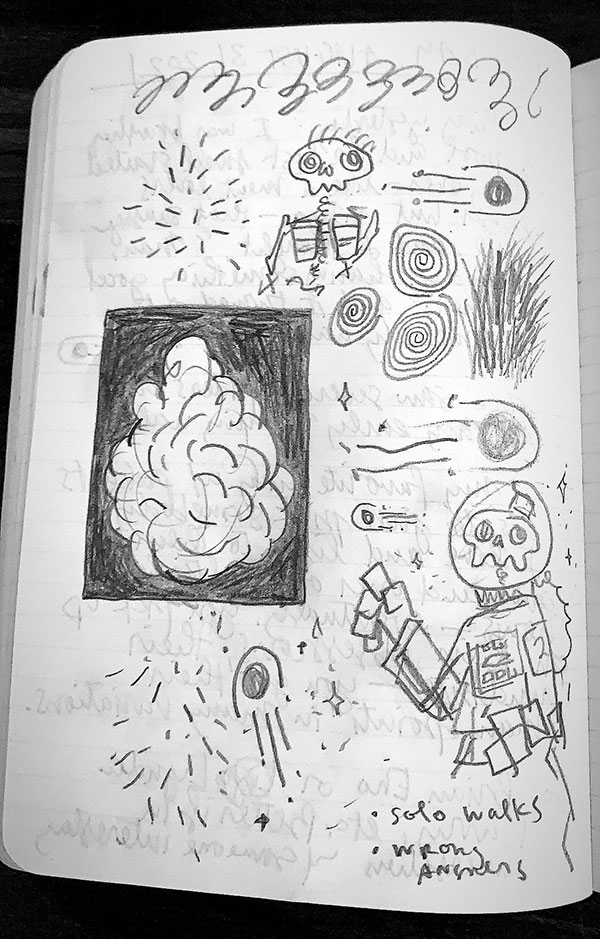
In a conversation with Cheryl Strayed about her book, The Secret to Superhuman Strength, the cartoonist Alison Bechdel said:
Something I thought about a lot as I was drawing this book is what a gloriously physical activity it is to draw. I draw for hours on end and it’s like an endurance exercise. There’s something physical that happens with that line coming out of my hand onto the page that is different from what I might type or do on the computer.
It is very embodied and I feel like drawing is a tracing of the world for me. I’m showing you what I’m seeing and then you’re holding it in your hands. It’s like this touch-based transmission.
For me, this fact is both the magic and the curse of comics.
One of the brutal realities for cartoonists is that drawing is such an embodied transmission that readers who are unfamiliar with your work might be initially repelled by your drawings and not be able to “get past” them to start turning the pages. (And, in fact, there really is no “getting past” the drawing of a comic — the drawing is the medium is the message.)
Comics is a labor-intensive medium, and the ratio of work put in by the maker vs. work put in by the reader is already super high. But because so much of the hand is in the work, it also has an initial visceral fail point, much like a podcast or a film: if the audience doesn’t like the narrator’s voice or the actor’s face, sometimes it’s adios before the story even begins.
This is one thing to be said for plain ol’ typeset prose: there’s very little right away on the page to repel the reader before they even dip into the work. Just words on a page, what do they say?
Now, keeping the reader reading, that’s hard no matter what medium you’re working in…
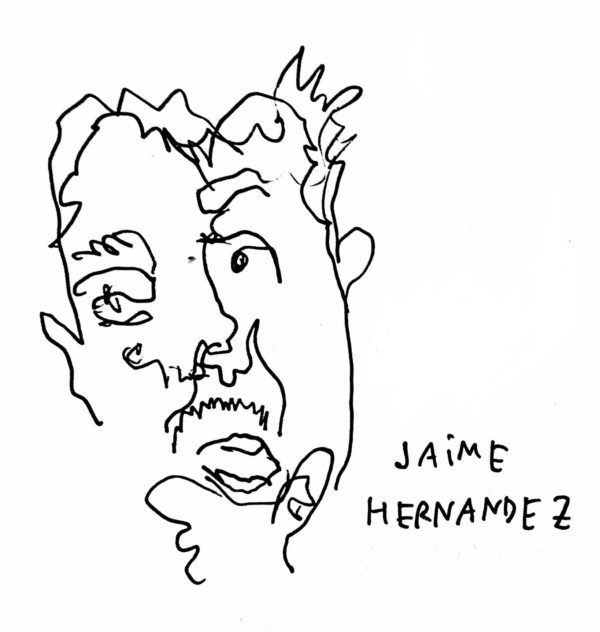
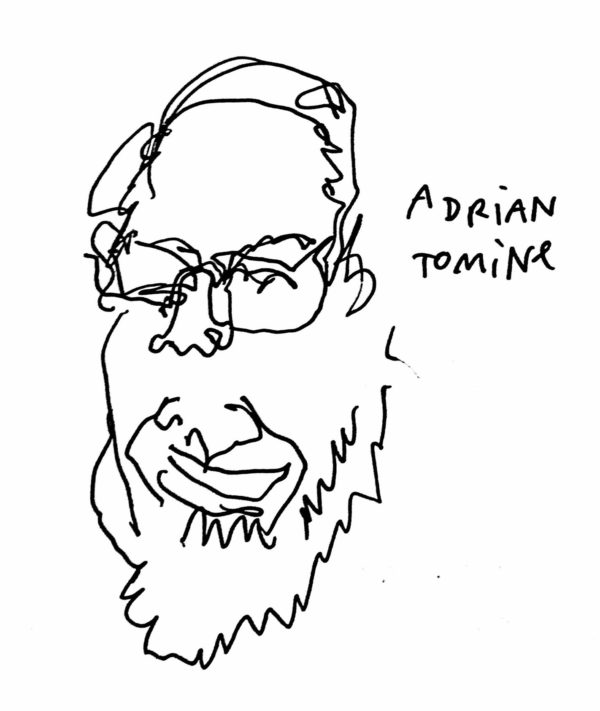
A pleasant lunchtime surprise yesterday: my friend Sonia Harris alerted me to a live-streamed conversation between legendary cartoonist brothers Jaime Hernandez and Gilbert Hernandez (Love and Rockets) and Adrian Tomine (The Loneliness of the Long-Distance Cartoonist). I only came in about half-way through, but I doodled some blind drawings and made a few notes.
The brothers talked a lot about how they work. Gilbert works 8 to 5 and then he’s done for the day and goes and hangs out with his family. He has about 3 comics going at once, and sometimes he’ll make up a comic just to have a place to put a story that’s in his head.
Jaime said getting to the drawing board is the hard part, and he spends a lot of time avoiding work, “letting it swim in my head.” Tomine said he tells people that’s how he works: by taking his kids to the playground and working the stories out in his head.
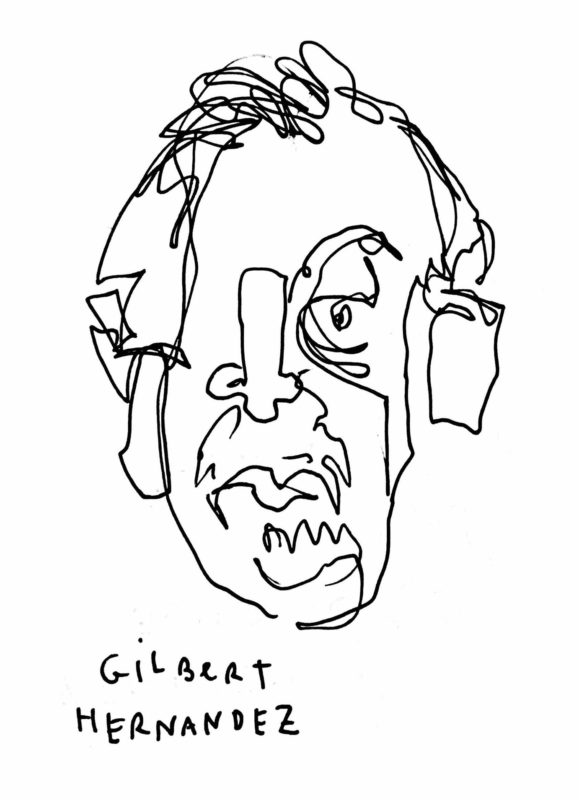
“I’ve been drawing comics since I was five,” Gilbert said. He lamented how comics isn’t the “nutty frontier” it once was. “Old shit is great.” he said. “I’m addicted to having old comics around.”
“I feel like I’m a descendent of you guys and it’s important to make that lineage clear,” Tomine said. When he’s asked about his influences by younger cartoonists, he lists sources he thinks are obvious, but the young cartoonists scribble down the names in their notebooks, as if they’d never heard of them. Gilbert said the only time he was bothered by being copied was when cartoonists started copying cartoonists who copied Love and Rockets, and the link in the chain was lost.
When asked about tools or tricks, Jaime voiced hesitation about giving advice, because most of the time with the work, he didn’t know he was doing it while he was doing it. He talked about making drawings that nobody was ever supposed to see and drawing without an audience. “Trust your instincts,” he said. “A lot of times it’s the pen that makes you draw the way you draw.”
“’Til the last comic you draw,” Gilbert said, “you’re still trying to figure out how to make a good one.”
“Do it because it makes you happy,” Jaime said. “That’s why you did it in the first place.”
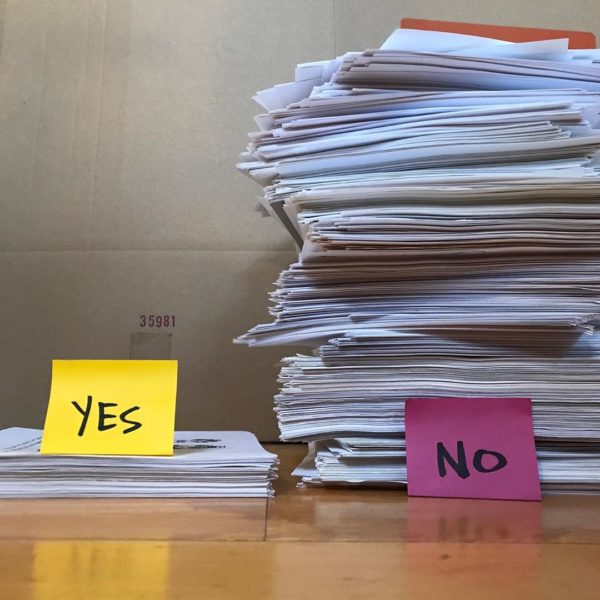
A photo from my friend and cartoonist Drew Dernavich:
Before I started submitting digital sketches to @newyorkermag a few years ago, I was doing them the old-school way: Sharpie on paper. But that takes up too much space, so I’m cleaning house. Here is the pile of ideas that got published vs. the ones that got rejected. And in multiple views so you can see the actual ratio. Cruel business, my friends. I’m still generating a lot of crappy rejected ideas, they’re just in digital form now!
Check out Drew’s Instagram for a sale of his rejects.
Related reading: The Rejection Collection, paper monuments to human effort
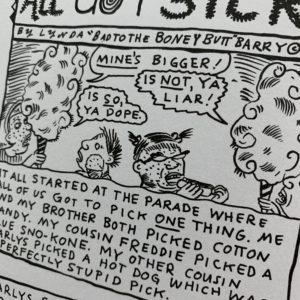
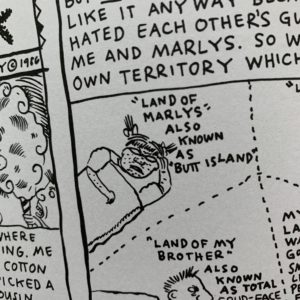
Lynda Barry, who we’ve all known was a genius, but is now officially one, posted these images on Instagram from “The Night We All Got Sick,” the first comic in The Greatest of Marlys, with the following caption:
These are the first drawings of Marlys. I didn’t know who she was or that I was about to spend the next 30 years with her. I was just making a comic strip about cousins getting sick after a parade. I didnt know who any of them where when they first showed up that day. And I was on the fence about them, wondering should I keep this drawing or not? It scares me to think how easily I could have thrown her away on this first day because I didn’t like the way she “looked”, because the drawing didn’t please me. I believe drawings have the same right to exist as I do. I’m so glad I kept the drawing. I’m so glad I didn’t throw her out.
“I believe Maryls conjures me as much as I conjure her,” Lynda writes in the book’s introduction. “The portable between her world and mine is a pen line made by the living mystery of this hand, this hand that looks like yours.”
We create our drawings and they create us.
This site participates in the Amazon Affiliates program, the proceeds of which keep it free for anyone to read.