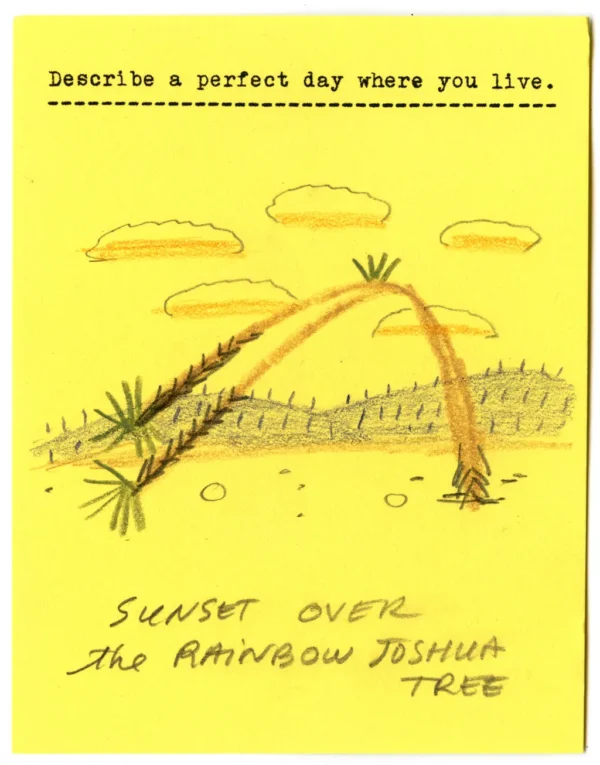
The latest typewriter interview is with artist Esther Pearl Watson.
(I can’t believe I’ve published 30 of these things!)
The latest typewriter interview is with artist Esther Pearl Watson.
(I can’t believe I’ve published 30 of these things!)
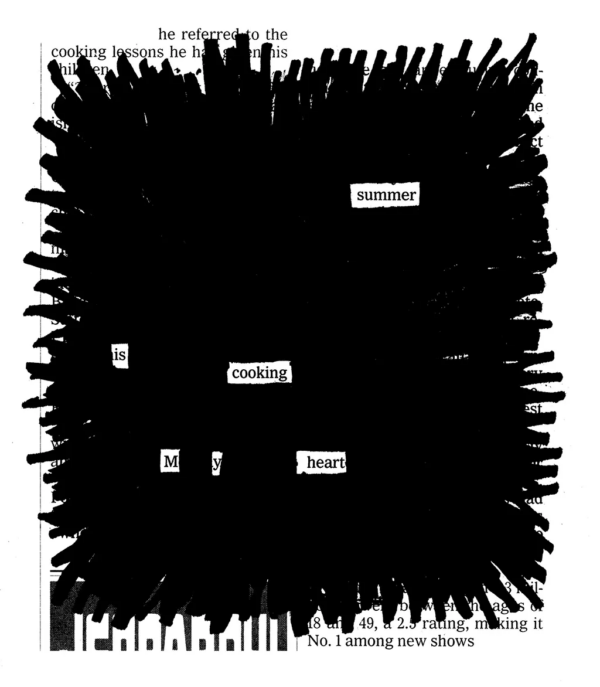
My last two Friday newsletters have referenced the late summer misery of September. (See: “The cruelest month.”)
From “The Birds are in misery”:
It is so miserable in Texas right now that I’ve taken to reciting Werner Herzog’smonologue from Les Blank’s Burden of Dreams: “The trees here are in misery and the birds are in misery. I don’t think they sing. They just screech in pain…. It’s an unfinished country. It’s still prehistorical. The only thing that is lacking is the dinosaurs here. It’s like a curse weighing on an entire landscape. And whoever goes too deep into this has his share of that curse. So we are cursed with what we are doing here. It’s a land that God, if he exists, has created in anger…. Taking a close look at what’s around us, there is some kind of harmony, but it is the harmony of overwhelming and collective murder. And we in comparison to the articulate vileness and baseness and obscenity… we in comparison to that enormous articulation, we only sound and look like badly pronounced and half-finished sentences…” (Summer here will end one day… in November, probably.)
I need to take this note to myself from September 2020 and auto-email it to myself every June:
Summer is a season for doing as little as possible. If I get any more of them, I plan to get through them by swimming and reading and generally practicing as much extreme idleness as I can get away with.
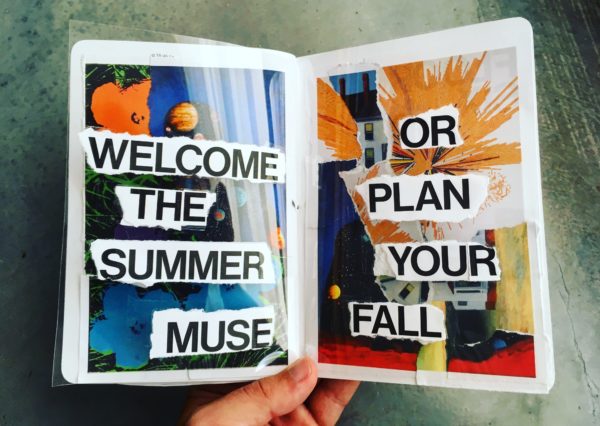
From my letter, “Summer is cooking my heart”:
One thing I know for sure that my notebooks have taught me is that life is not linear. Life is more like a spiral. We travel around the sun and we live in meteorological, spiritual, and creative seasons.
“Live in each season as it passes,” Thoreau wrote in his own notebook in late summer of 1853, “and resign yourself to the influences of each.” (I would add: the more you deny the season you’re in, the more you suffer.)
When I visit myself in the pages of my notebooks — flipping through an old summer diary, for example — I see that my patterns are well-established and that I’ve been here before and I’ll be here again. (If I’m lucky, that is.) Keep going!
On that note: It’s the first day of fall and Halloween is 39 days away…

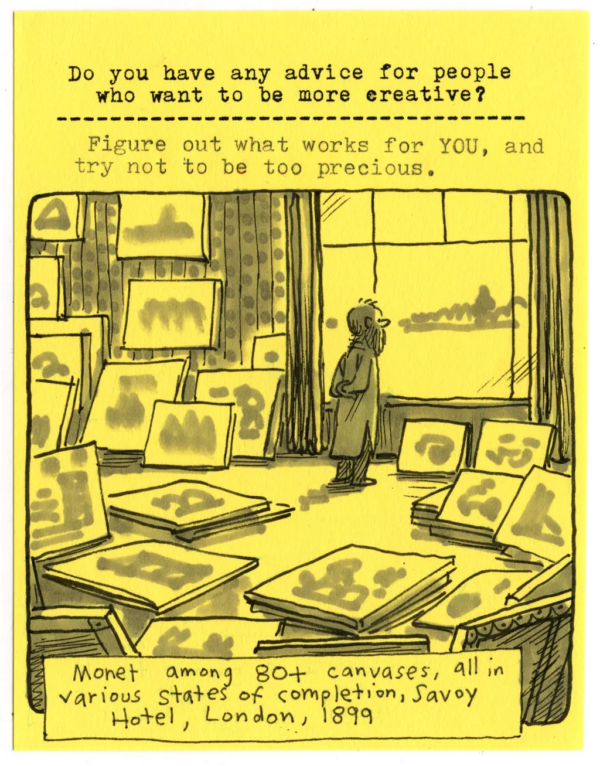
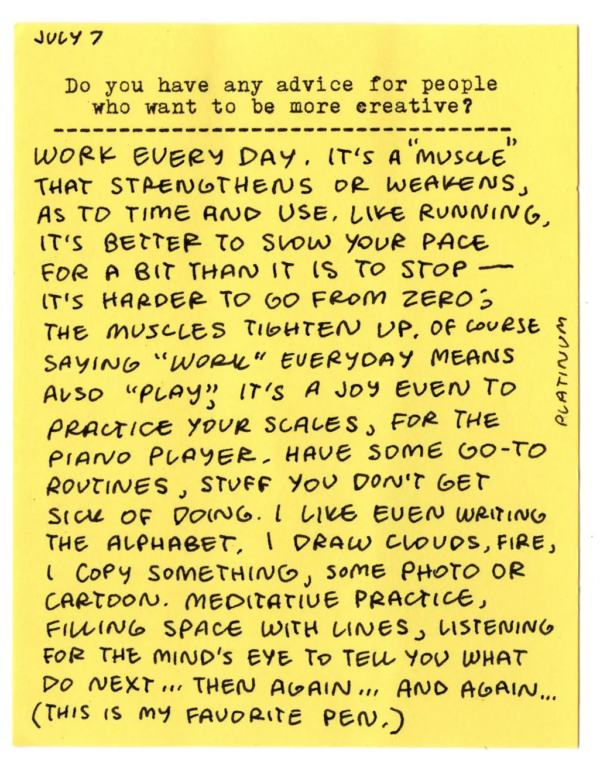
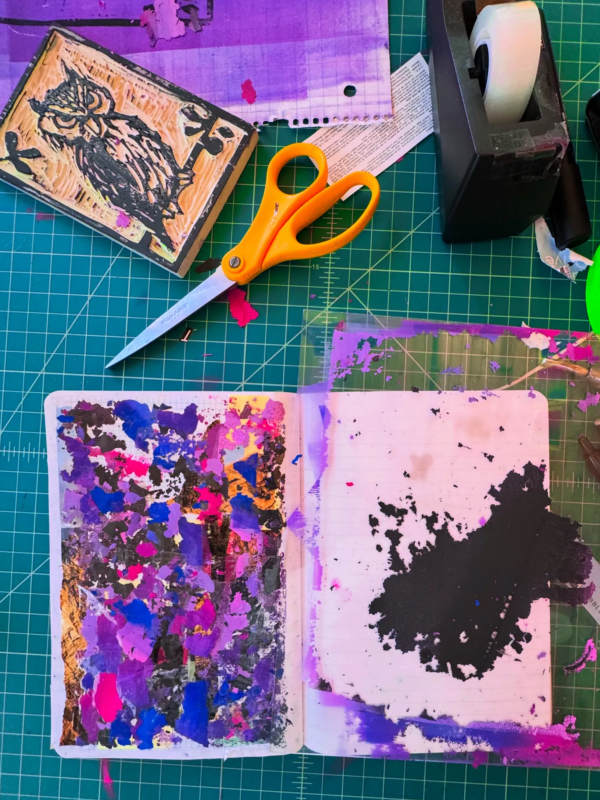
My latest typewriter interviews are with two cartoonists — one is a fully-drawn and pithy eye feast from Adam Koford, and the other a surprisingly wordy meal from Kevin Huizenga:
I used a quote from Patrick O’Brian’s Post Captain to start my letter, “No urge to be doing”:
“There are days… when one sees as though one had been blind the rest of one’s life. Such clarity – perfection in everything, not merely in the extraordinary. One lives in the very present moment; lives intently. There is no urge to be doing: being is the highest good. However… doing of some kind there must be.”
I am still in the kind of emotional and spiritual fallout that happens after I release a book, well-described by bell hooks in Teaching To Transgress:
Whenever I finish a work, I always feel lost, as though a steady anchor has been taken away and there is no sure ground under my feet. During the time between ending one project and beginning another, I always have a crisis of meaning. I begin to wonder what my life is all about and what I have been put on this earth to do. It is as though immersed in a project I lose all sense of myself and must then, when the work is done, rediscover who I am and where I am going.
It’s funny that hooks refers to an “anchor” because one of the recurring themes in O’Brian’s Aubrey/Maturin series is how much a sailor doesn’t know what to do with himself when he’s on land.
Hence the beginning of the greatest seafaring novel, Moby-Dick:
“Whenever I find myself growing grim about the mouth; whenever it is a damp, drizzly November in my soul; whenever I find myself involuntarily pausing before coffin warehouses, and bringing up the rear of every funeral I meet; and especially whenever my hypos get such an upper hand of me, that it requires a strong moral principle to prevent me from deliberately stepping into the street, and methodically knocking people’s hats off–then, I account it high time to get to sea as soon as I can. This is my substitute for pistol and ball. With a philosophical flourish Cato throws himself upon his sword; I quietly take to the ship.”
I’m not quite there, I’m still enjoying my shore leave, so to speak, but it won’t be long until it’ll be time to get out to sea again.
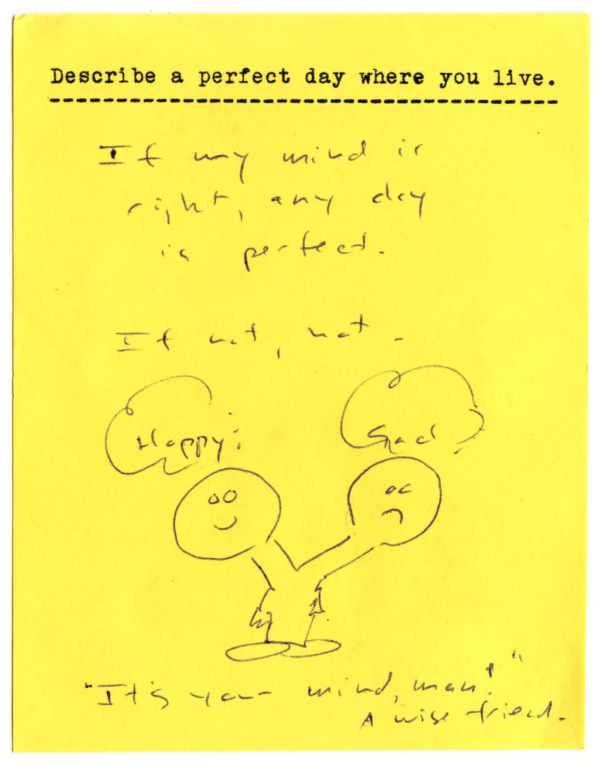
A near-Herculean feat of transcription, if I do say so! Read it here.
This site participates in the Amazon Affiliates program, the proceeds of which keep it free for anyone to read.
.jpg)