
Whenever someone says, “You should do a parenting book!” I think of this tweet.
Whenever someone says, “You should do a parenting book!” I think of this tweet.

“Insight comes, more often than not, from looking at what’s been on the table all along, in front of everybody, rather than from discovering something new.”
—David McCullough
In his Paris Review interview, David McCullough talks about how important seeing is to the writer and historian, and how much his training in drawing and painting has been of great benefit to him in his work. “Drawing is learning to see and so is writing.”
He has a motto tacked above his desk: LOOK AT YOUR FISH.
He explains:
It’s the test that Louis Agassiz, the nineteenth-century Harvard naturalist, gave every new student. He would take an odorous old fish out of a jar, set it in a tin pan in front of the student and say, Look at your fish. Then Agassiz would leave. When he came back, he would ask the student what he’d seen. Not very much, they would most often say, and Agassiz would say it again: Look at your fish. This could go on for days. The student would be encouraged to draw the fish but could use no tools for the examination, just hands and eyes. Samuel Scudder, who later became a famous entomologist and expert on grasshoppers, left us the best account of the “ordeal with the fish.” After several days, he still could not see whatever it was Agassiz wanted him to see. But, he said, I see how little I saw before. Then Scudder had a brainstorm and he announced it to Agassiz the next morning: Paired organs, the same on both sides. Of course! Of course! Agassiz said, very pleased. So Scudder naturally asked what he should do next, and Agassiz said, Look at your fish.
He tells that story in all of his writing classes, and then emphasizes that looking more closely helps you discover new things in old or ordinary material that other people have not:
The chances of finding a new piece [of the puzzle] are fairly remote—though I’ve never written a book where I didn’t find something new—but it’s more likely you see something that’s been around a long time that others haven’t seen. Sometimes it derives from your own nature, your own interests. More often, it’s just that nobody bothered to look closely enough.
Filed under: looking
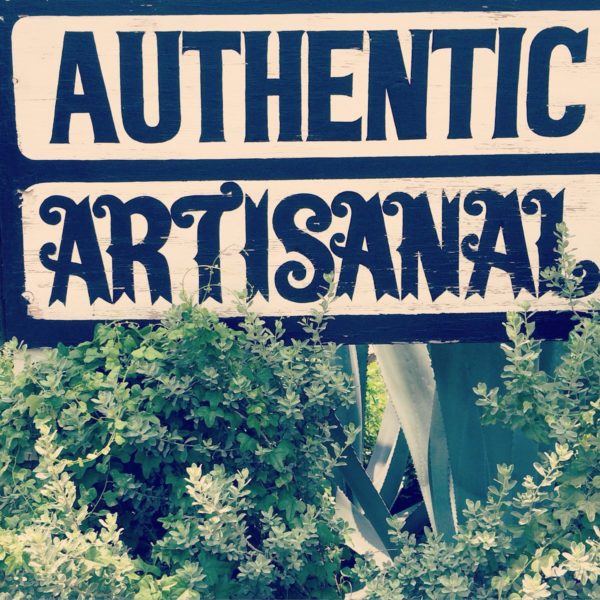
Clayton Cubitt: “Once you see that ‘artisanal’ actually spells ‘art is anal’ you can’t unsee it.”

“I never went to an art school. I failed the art courses that I did take in school. I just looked at a lot of things. And that’s how I learnt about art, by looking at it.”
—Jean-Michel Basquiat
My favorite part of the documentary Basquiat: Rage to Riches is Fab 5 Freddy recalling how he and Basquiat started a “museum club”: every week or so they would cab up to The Met and walk around with sketch pads, pretending to be art students, looking at the paintings.
Here’s a clip of Freddy joking about how they thought Carvaggio was “gangster” for carrying a sword:
He also points out how white artists were inspired by black culture — Pollock listening to jazz while doing his improvisational drawings, Picasso stealing from African masks — and how Basquiat took their influence and reclaimed it back into his work.

It’s a good watch. If you can, though, check out Jean-Michel Basquiat: Radiant Child, which I think dives a little deeper into his influences.

For example, in that documentary you’ll learn that Basquiat loved to have a bunch of books around when he painted. Above are two comparison screenshots, one showing a page from Gray’s Anatomy (his mother gave him a copy as a child after he got hit by a car) and one showing a page of hobo signs from Dreyfuss’s Symbol Sourcebook (a personal favorite of mine). He also had copies of Da Vinci’s Notebooks and Burchard Brentjes’ African Rock Art.

Here’s a bonus image from my Basquiat file: his hand-copied table of contents from Melville’s Moby-Dick.

One thing I love about working on paper is that you literally end up with these gigantic piles of your effort. (Evidence of your days.) At some point, I started collecting photos of other people’s paper output.


It strikes me how much these paper stacks look like buildings or skyscrapers… paper monuments to human effort…
This site participates in the Amazon Affiliates program, the proceeds of which keep it free for anyone to read.