I love reading more than one book at a time and letting the books talk to each other. I love promiscuous reading. Here’s Octavia Butler on her practice:
I generally have four or five books open around the house—I live alone; I can do this—and they are not books on the same subject. They don’t relate to each other in any particular way, and the ideas they present bounce off one another. And I like this effect. I also listen to audio-books, and I’ll go out for my morning walk with tapes from two very different audio-books, and let those ideas bounce off each other, simmer, reproduce in some odd way, so that I come up with ideas that I might not have come up with if I had simply stuck to one book until I was done with it and then gone and picked up another.
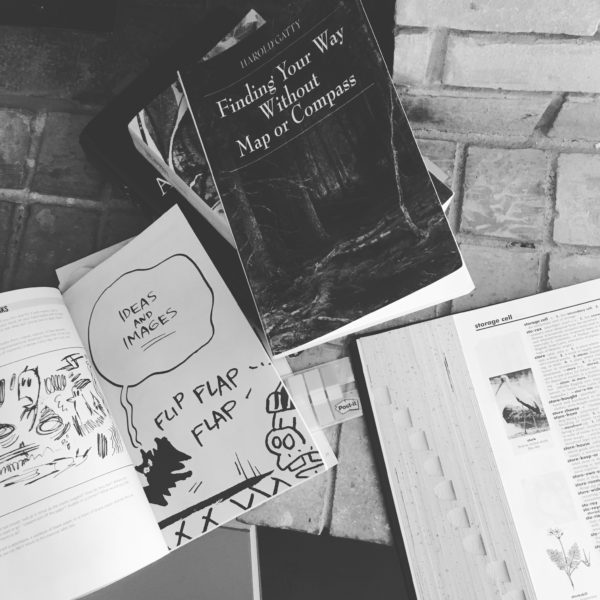
I’m currently dipping in and out of two books: 1) Harold Gatty’s Finding Your Way Without Map or Compass — a 1958 wayfinding manual and Christmas gift from my wife — and 2) Tom Hart’s How To Say Everything, material Tom’s been working on for the past decade, but just recently published in book form.
They compliment each other beautifully on the subject of storing up images. Here’s Gatty:
There is something which all the greatest artists and writers, naturalists and scientists, voyagers and explorers, poets and pioneers, share. It is an interest in the external world and the ability to contribute something creative to human life in this world by means of taking parts of the world to pieces and putting them all together again. The ability to observe, and the ability to see the little things that seem trivial at first, may become amazingly important and meaningful. Out of little observations huge ideas may grow; and if a mind, made receptive by training in the use of the senses, can store away a mass of observations, the time will come when the whole collection can be unrolled, connected together as a great novel is planned, in a compelling pattern that tells us something new.
And here’s Hart, quoting Stanislavski, in his chapter, “Creating A Store”:
You must be constantly adding to your store. For this purpose you draw… principally upon your own impressions, feelings and experiences. You also acquire material from life around you, real and imaginary, from reminiscences, books, art, science, knowledge of all kinds, from journeys, museums and above all from communication with other human beings.
In both of these contexts the word “store” refers to stocking up or keeping a supply for future use, like a squirrel, but it also conjures retail associations in my brain. I’m reminded of Allen Ginsberg, in “A Supermarket in California,” who, dreaming of Walt Whitman, wandering around, looking at the moon, stops into the neon supermarket, “shopping for images.”
That seems to be so much of what I’m always doing — shopping for images — adding to the store, stocking up for the future…
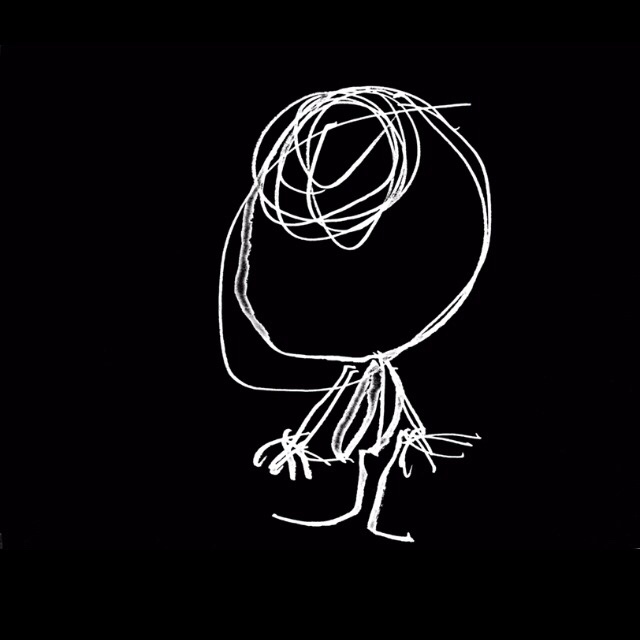
 Top image: Drawing of a brain by Jules (3)