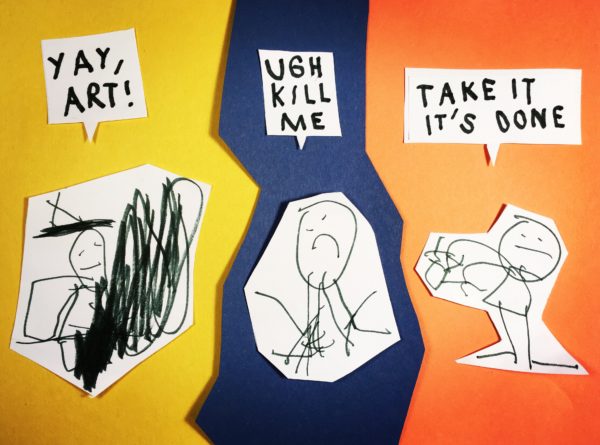
After we put the boys to bed, my wife and I clean up the 3-year-old’s dozens of drawings he leaves all over his drawing space, deciding what to keep and what to recycle. The figures above were all drawn on the same piece of paper and I thought they could tell a story, so I cut them out and had my 5-year-old letter the speech balloons. They’re still too young to (peacefully) jam together, so I like doing these little orchestrated collaborations. (Previously: “What do you know?”)
The old welcoming the new
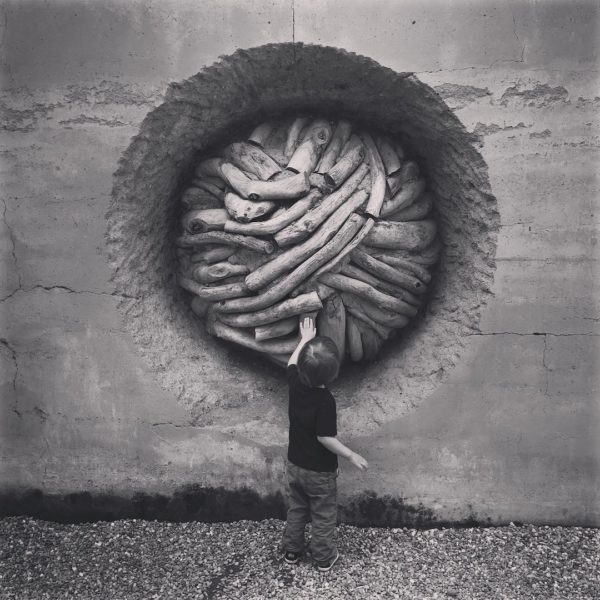
A few days ago in San Francisco we were having margaritas near the Presidio Officers’ Club when my son Jules bolted and disappeared around the corner. I found him admiring this Andy Goldsworthy piece, Earth Wall, which I had never seen. Goldsworthy has four pieces in the Presidio—Tree Fall, Wood Line, and Spire:

I was reading about Spire in the brochure about Goldsworthy and the Presidio, and I was struck by this detail: “The sculpture is fated to fade into the forest as young cypress trees planted at its base ultimately grow to obscure the piece – like the old forest welcoming the new.”
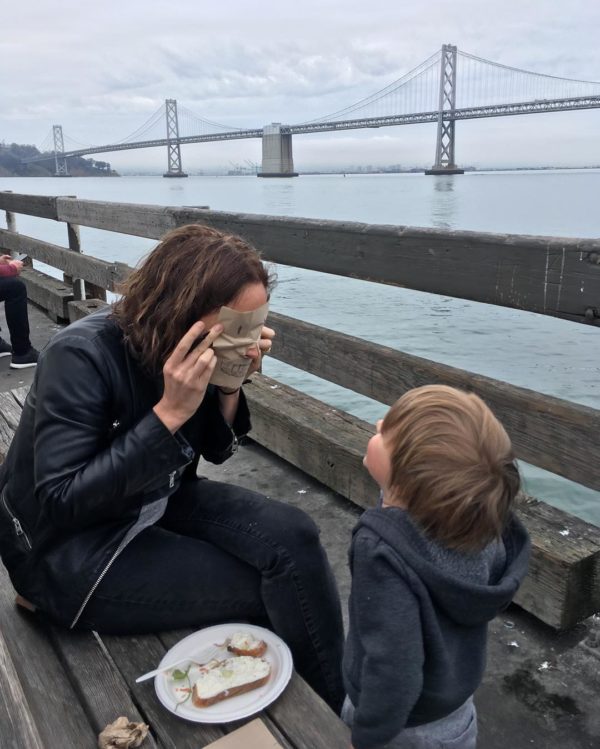
It’s Jules’ 3rd birthday today. He’s not a baby anymore. This morning in our hotel room I watched him drawing along to Super Simple Draw, and I felt, most definitely, that if I’m the spire now, he’s the young cypress, and I will be happy for him to obscure me.

The 5-year-old docent
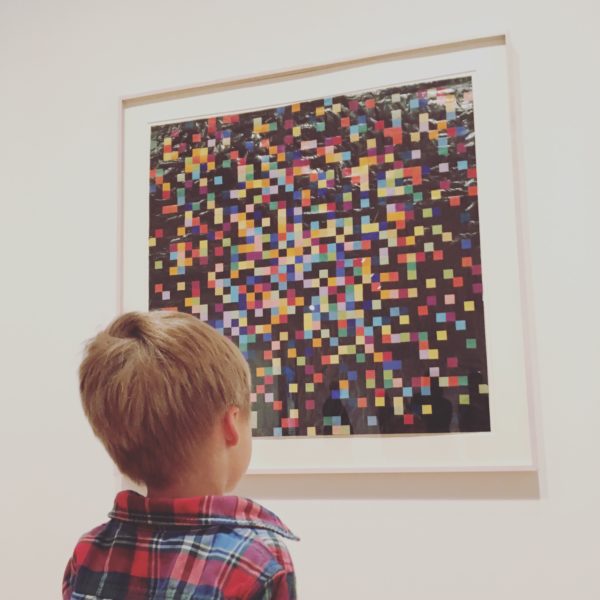
Ever since he’s been old enough to walk, one of my favorite things has been to let my oldest son lead me around an art museum. Yesterday we hit the new chapel designed by Ellsworth Kelly, but my favorite part was browsing the exhibit of Kelly’s work at the Blanton.
O was most drawn to the piece above, Spectrum ColorsArranged By Chance V, which delighted me, as it’s my favorite series of Kelly’s work, and it has a special connection to kids: It was made in 1951 after Kelly was browsing a stationery shop in Paris and came across a special kind of gummy paper made for French schoolchildren. Kelly cut the paper into squares, made a 38×38 grid, assigned each color a number, and pulled numbers out of a hat to get the composition.
Kelly said of his work:
“I don’t invent… It’s not about my signature. It’s something about perception. My eye picks up things in nature; I’m interested in the whole thread of what you look at… I always feel I have to do something new. It has to hit me as something I haven’t seen before, and that gets harder as I get older. But I’m not searching for something. I just find it. The idea has to come to me. I find myself in nature–the roof of a building or a shadow, something that has the magic of life, fragments I can take out and build on…. I have trained my eye to play with images…. My eye is like a dictator for me. I don’t understand it, but it rules me. And it always surprises me. I might do a lot of curves, put them out and look at them. My eye tells me the one to use.”
O loves to read the museum labels next to the pieces, so we were soon discussing the words “spectrum,” “arranged,” and “chance,” and then roman numerals, as he’s newly interested with math and numbers. I love talking to him about stuff like this, as I either quickly realize how little I actually know about the subjects, or I articulate something I’ve never articulated before.
Here is writer Rumaan Alam saying the same about looking at art with his kids:
Talking to my kids about what we’re looking at helps clarify my thinking, much as reading aloud something you’re writing can sharpen a sentence. I have to articulate, in terms a kid can comprehend, what I see or feel or think about a piece of art. I find I don’t rush to my own judgment, even if I think I’ve already made that judgment. Looking at Carmen Herrera’s precise minimalist paintings last winter at the Whitney, I stumbled over explaining to my kids why I like them—their precision, the beautiful purity of her colors—and realized that was something I’d never fully explained to myself.
After looking at the Kelly pieces, O and I decided we could make our own versions when we got home. (We’re headed to the craft store later today to look for the right paper.)
Then as if on cue, history repeated itself…
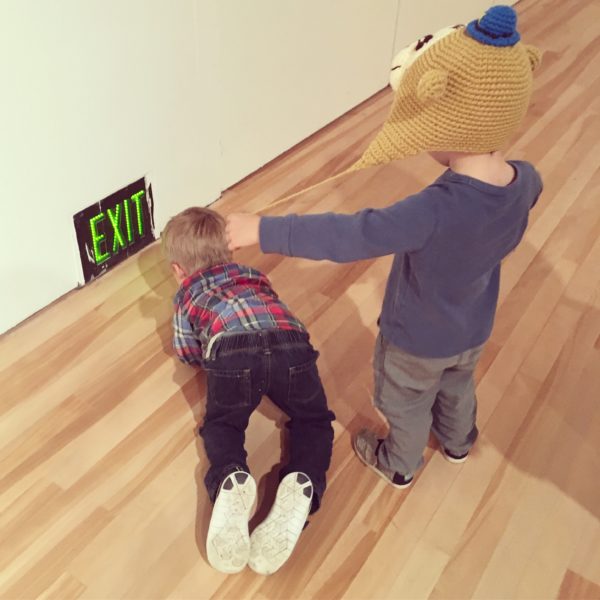
…and the two boys re-staged this scene from about a year ago:
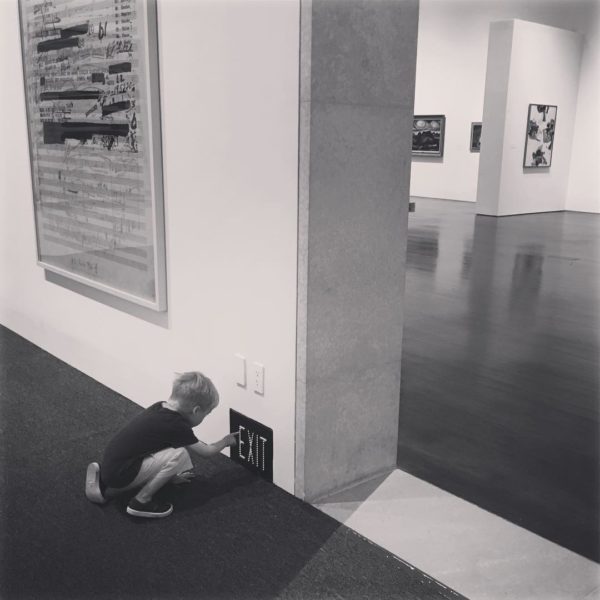
Again I say, if you want to enjoy art, borrow a kid.
What do you know?
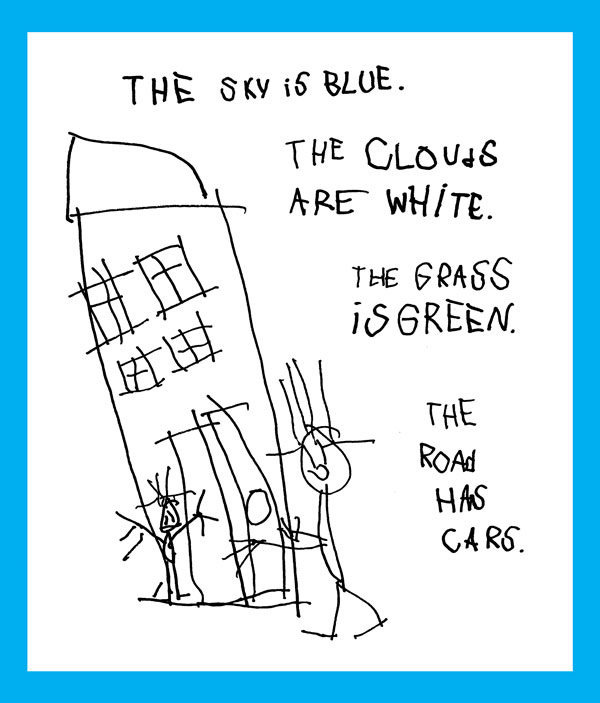
I complained to my 5-year-old that I didn’t feel like blogging today.
“Could you write down what you know about the world and I’ll put it on my website?”
He wrote down four sentences.
“That’s it?” I asked.
“That’s it!” he said.
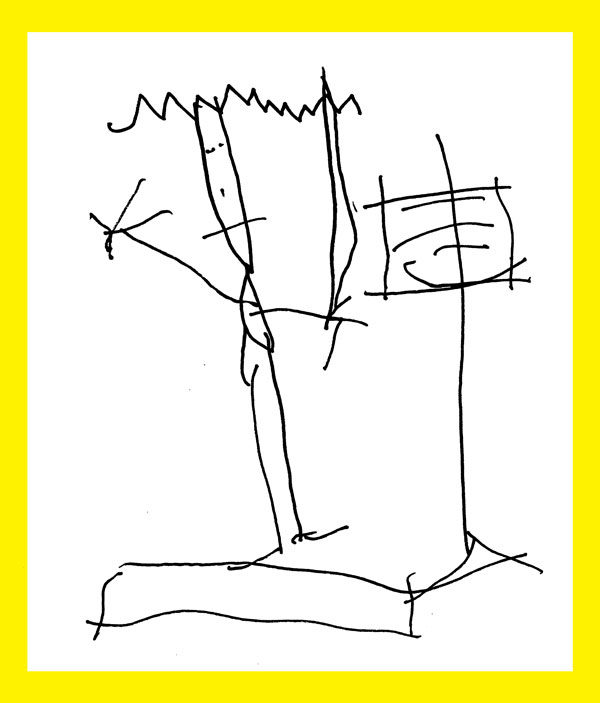
So we added his words to a drawing by his 2-year-old brother.
Accidents will happen
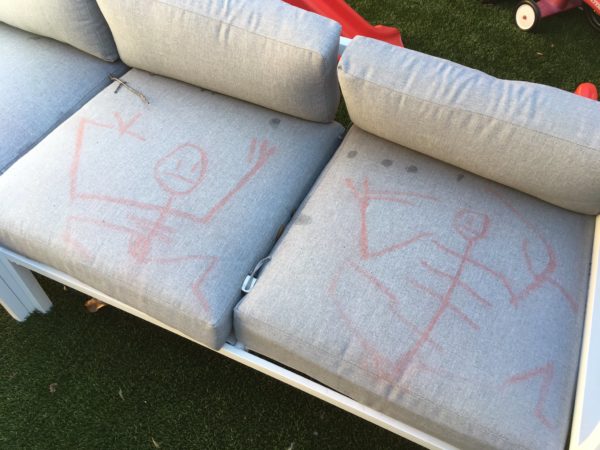
The x-ray artist got carried away. The question is: What next? Erase all trace of the accident? Scrub the cushions? Flip them over?
Or, maybe we’ll do what my friend Marcie suggested: Embroider them.
It reminds me of the Oblique Strategy: “Honor thy error as a hidden intention.”
Or Bob Ross: “We don’t make mistakes, we have happy accidents.”
UPDATE 3/17/2018: My wife did an amazing job!
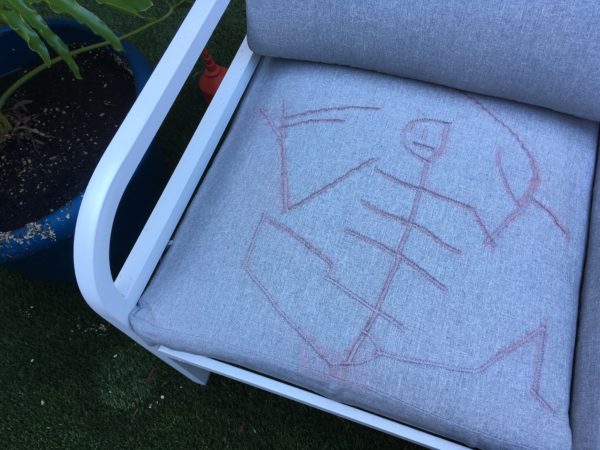
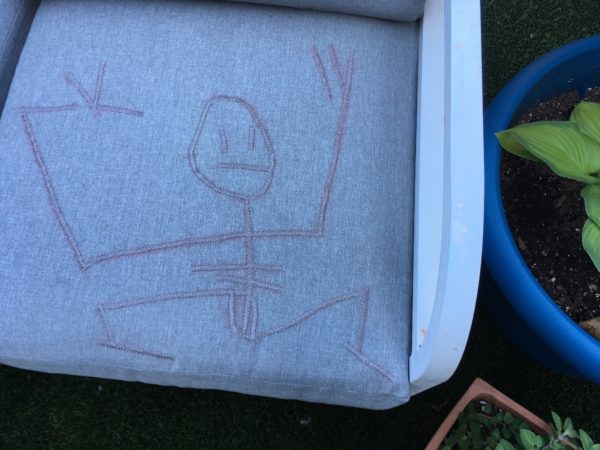
UPDATE: 4/9/2018: Jason Kottke says: “You kintsugi-ed your couch!” (Kintsugi is the Japanese practice of mending broken pottery with gold — emphasizing the break, rather than hiding it.)
UPDATE: 4/12/2018: A similar story of parents who framed their child’s wall drawing. (My friend Ben said he had a friend who framed a crack in his wall that wouldn’t stay fixed.) See also: this thread about repairing damaged manuscripts.